Do cats get nightmares or something very close to them. While no one can ask a cat what they dreamed about, sleep research on animals strongly suggests that cats experience vivid dreams during sleep, and that some of those dreams may not be pleasant. If you’ve ever watched your cat twitch, growl, or cry out while sleeping, you’ve likely witnessed it firsthand.
Understanding what’s happening in your cat’s sleeping brain is genuinely fascinating and knowing when to step in (and when to leave them alone) can make you a more confident, caring owner.
Table of Contents
Do Cats Dream? What the Science Says
The short answer: yes, cats do dream and the evidence is solid.
Cats, like humans and most mammals, cycle through different stages of sleep. The two main ones are slow-wave sleep (light sleep) and REM sleep Rapid Eye Movement sleep. REM is the stage where vivid dreaming happens in humans, and cats spend a significant portion of their sleep time there.
A landmark study from the 1960s by researcher Michel Jouvet removed the brain mechanism in cats that causes paralysis during REM sleep. The cats then physically acted out their dreams stalking, pouncing, and reacting to things that weren’t there. This confirmed that cats experience active, scenario-based dreams, not just abstract brain noise.
More recent neuroscience supports this. The hippocampus the brain region that stores memory and experience shows the same patterns during REM sleep as it does during waking activity. In other words, your cat’s brain is likely replaying and processing real experiences while they sleep. Hunting, playing, chasing, fleeing all fair game for a sleeping cat’s mind.
So when people ask “do cats dream,” the scientific consensus is a confident yes.
Signs Your Cat May Be Having a Bad Dream
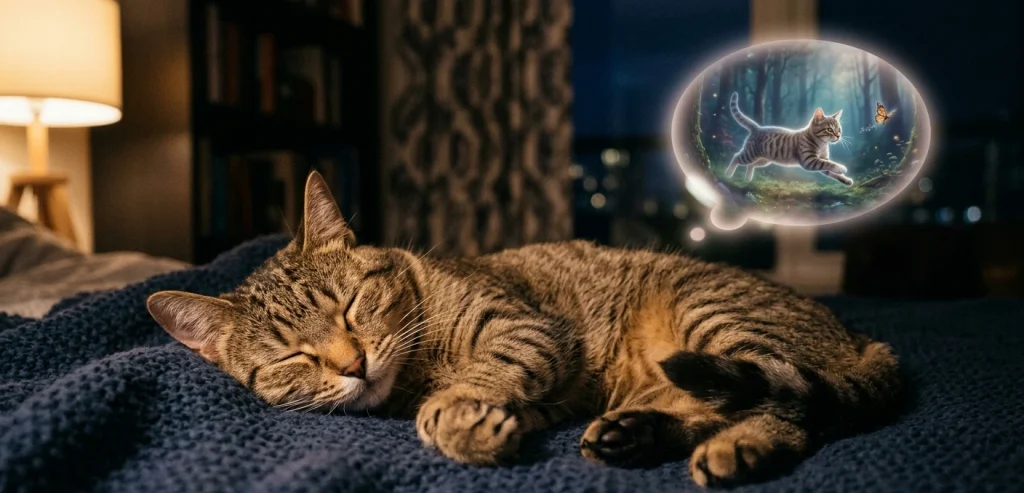
Cat bad dreams look a lot like human ones restless movement, distress sounds, sudden waking. Here’s what to watch for during your cat’s sleep:
- Twitching paws or legs – like they’re running or pawing at something
- Tail flicking or lashing – often a sign of agitation even while asleep
- Whisker and facial movements – subtle but noticeable if you’re watching closely
- Vocalizing – soft chirps are usually fine; growling, hissing, or crying suggests distress
- Rapid, shallow breathing – distinct from the slow breathing of deep sleep
- Sudden waking with wide eyes – your cat jolts awake, looks disoriented or alarmed
- Defensive posture on waking – crouching, puffed fur, ready to flee or fight
The occasional twitch is completely normal and almost always harmless. It’s the combination of distress sounds, frantic movement, and startled waking that points toward something more like a nightmare than a neutral dream.
It’s worth knowing that some of these signs also overlap with feline seizure activity. The key difference: during REM movement, your cat can be gently woken. During a seizure, they cannot. If you’re unsure, your vet can help distinguish the two.
What Do Cats Dream About?
Nobody knows for certain, but the evidence points toward cats dreaming about things they actually experience.
The hippocampal replay research mentioned above suggests that the brain consolidates recent memories during REM sleep essentially re-running the day’s events. For a cat, that likely means dreaming about hunting (even if “hunting” means chasing a toy), territory exploration, interactions with other animals, or encounters with people.
Cats that have experienced trauma or stressful environments may dream about those experiences too. A rescue cat with a difficult past might be more prone to sleep disturbance than a cat raised in a calm, safe home from kittenhood. This isn’t speculation it mirrors what’s documented in traumatized humans and other animals like dogs and rats.
So your cat’s cat bad dreams are probably not random. They likely reflect real memories and emotions fear, frustration, or unresolved stress from waking life.
Should You Wake a Cat Having a Nightmare?
This one divides cat owners, and the honest answer is: it depends.
If your cat is twitching mildly and vocalizing softly, leave them alone. REM sleep is restorative. Interrupting it repeatedly can affect your cat’s mood, alertness, and even immune function over time. A little dream activity is healthy.
If your cat seems genuinely distressed crying out, thrashing, struggling to wake a gentle intervention is fine. Don’t touch them abruptly. Say their name softly from a short distance. Let them come to awareness gradually. A startled cat woken suddenly from a nightmare may scratch or bite reflexively, not out of aggression, but pure alarm.
Once they’re awake and oriented, a calm voice and gentle presence helps them settle. You don’t need to make a fuss just being nearby is usually enough.
Never shake your cat awake or pick them up mid-dream. That’s the fastest way to get scratched and to leave your cat more anxious, not less.

How Sleep Quality Affects Your Cat’s Wellbeing
Cats sleep between 12 and 16 hours a day some seniors and very young kittens closer to 20. That’s not laziness. Sleep is when the body repairs tissue, processes immune responses, and consolidates memory and learning.
Poor sleep quality whether from nightmare frequency, environmental disruption, or underlying stress has real effects on your cat’s waking behavior. Signs that your cat isn’t sleeping well include:
- Increased irritability or aggression
- Reduced appetite
- Excessive hiding or clinginess
- Overgrooming or stress-related behaviors
- Low energy during times they’d normally be active
If you notice these alongside frequent sleep disturbances, the issue may be bigger than occasional cat bad dreams. Chronic stress, pain, or anxiety can disrupt sleep cycles just as they do in humans.
Creating good sleep conditions matters. Cats sleep best in quiet, warm, familiar spots where they feel safe. A consistent routine, a predictable home environment, and positive social interaction during waking hours all support better, calmer sleep.
When to See a Vet
Most dream activity in cats is completely normal and needs no intervention. But a few situations are worth raising with your vet:
- Frequent, intense episodes of distress during sleep that happen regularly
- Confusion or disorientation after waking that lasts more than a few seconds
- Jerky, repetitive movements that don’t stop when you call your cat’s name this may indicate a seizure disorder
- Sudden change in sleep behavior in an older cat new or worsening nighttime disturbance can signal neurological changes, pain, or cognitive decline
- Sleep disturbance paired with waking behavioral changes– aggression, hiding, appetite loss, or excessive vocalization
Feline cognitive dysfunction syndrome (a condition similar to dementia in older cats) commonly disrupts sleep. If your senior cat suddenly seems confused at night or has reversed their sleep-wake cycle, that’s worth investigating.
Frequently Asked Questions
Do cats get nightmares the way humans do? Cats appear to experience something very similar to nightmares. During REM sleep, their brains process memories and emotions including fear and stress in the same way human brains do. They can’t describe what they dreamed, but the behavioral signs during sleep are hard to interpret any other way.
How do I know if my cat is dreaming or having a seizure? During a dream, your cat can be woken with a gentle voice. During a seizure, they cannot respond and movement is typically more rigid, rhythmic, or uncontrolled. If you’re unsure, record an episode on your phone and show your vet.
Should I comfort my cat after a nightmare? Yes, but calmly. Speak softly, let them orient themselves, and offer gentle presence without forcing contact. Cats often just need a moment to register that they’re safe.
Do cats dream more at certain times of day? Cats cycle in and out of REM sleep throughout their many daily naps. They tend to have longer, deeper REM periods after active play sessions so a cat that’s well-exercised during the day may actually dream more intensely.
Can a cat’s past trauma affect their dreams? Very likely, yes. Animal sleep research consistently shows that stress and trauma influence dream content. Rescue cats or cats with difficult histories may show more sleep disturbance than cats raised in stable environments.
Do kittens dream more than adult cats? Yes. Kittens spend a much higher proportion of sleep time in REM. Their brains are processing enormous amounts of new information every day, and sleep is when a lot of that gets consolidated. The twitching, squeaking, and paddling you see in a sleeping kitten is almost constant and completely normal.
Is it bad to wake a dreaming cat regularly? Occasionally, no. But regularly disrupting REM sleep can affect your cat’s mood, immune function, and memory. Let mild dream activity run its course.
Can anything reduce how often my cat has bad dreams? Reducing stress in waking life helps most. Enrichment, play, a stable routine, and a safe sleeping environment all contribute to calmer sleep. For cats with anxiety disorders, your vet may suggest behavioral interventions or, in some cases, medication.

The Bottom Line
Cats dream that much is settled science. Whether those dreams tip into nightmare territory depends on the cat, their history, and their current emotional state. The twitching, vocalizing, and startled waking you sometimes see are your cat’s sleeping brain doing exactly what it’s designed to do: processing the world.
Most of the time, the kindest thing you can do is let them sleep. When they do seem distressed, a calm voice and quiet presence is all they need from you. For more on understanding your cat’s behavior and keeping them healthy and happy, check out
Photo by sk zhao on Unsplash
Zingi is a digital content creator and pet enthusiast with a passion for helping animal lovers make smarter, more informed decisions. With hands-on experience researching dog breeds, pet care routines, and tech products, Zingi writes guides that cut through the noise and focus on what actually matters for everyday pet owners and tech users.