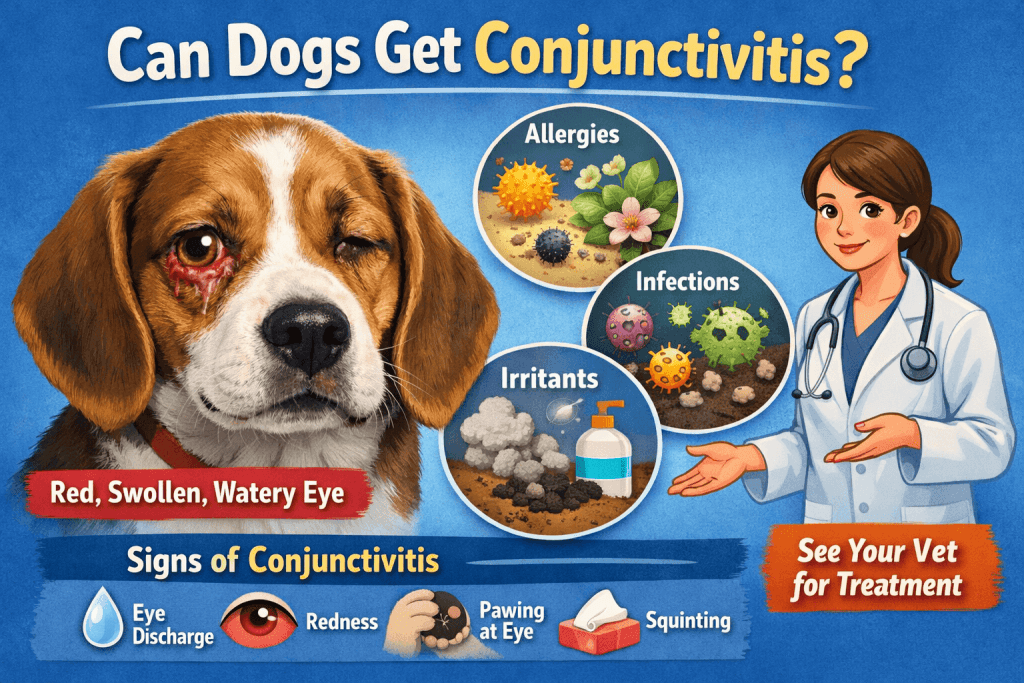
Can dogs get conjunctivitis and it’s one of the most common eye problems vets see every day. If you’ve noticed your dog pawing at their face, squinting, or waking up with crusty eyes, it’s natural to worry. The good news is that most cases are very treatable, especially when caught early. This guide explains exactly what to look for, what causes it, and how to help your dog feel better fast.
What is conjunctivitis in dogs?
Conjunctivitis is inflammation of the conjunctiva the thin, moist tissue that lines the inside of your dog’s eyelids and covers part of the eyeball. When this tissue becomes irritated or infected, it swells and turns red, which is why the condition is also called “pink eye.”
Dog eye inflammation can affect one eye (usually a sign of a foreign body or injury) or both eyes at once (more typical with infections or allergies). It’s not a disease on its own but rather a symptom of an underlying issue which is why identifying the cause matters as much as treating the discomfort.
Conjunctivitis in dogs is not the same as the human version, and in most cases it cannot be passed between dogs and people. However, some bacterial forms can spread between dogs, so if you have multiple pets, keep an eye on all of them.
Table of Contents
Signs of dog eye infection
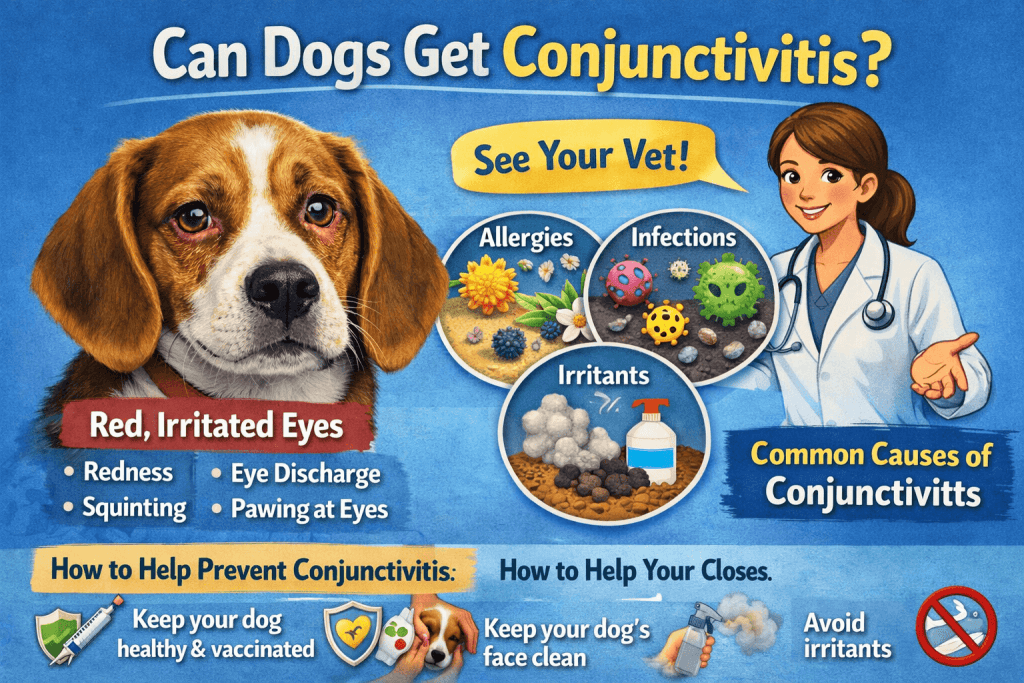
Dogs can’t tell you their eyes hurt, so knowing the signs is everything. Symptoms can appear gradually or come on overnight. Here’s what to watch for:
- Red or pink-looking whites of the eye
- Watery discharge clear, yellow, green, or white
- Crusty buildup around the eye, especially after sleep
- Swollen or puffy eyelids
- Squinting or keeping one eye partially closed
- Pawing, rubbing, or scratching at the face
- Blinking more than usual
- A visible third eyelid (the pale membrane in the inner corner)
- Sensitivity to light your dog may turn away from bright rooms
- Cloudiness or change in the appearance of the eye itself
See a vet quickly if:
You notice sudden cloudiness, a visible injury, or your dog seems to be in significant pain. These can signal something more serious than basic conjunctivitis.
What causes dog conjunctivitis?
Understanding the cause helps you choose the right treatment. There are several common culprits:
Allergies
Seasonal allergies from pollen, grass, mould, or dust are a leading cause of dog eye inflammation. Allergic conjunctivitis usually causes watery, clear discharge in both eyes. You’ll often see it alongside sneezing or itchy skin. Certain breeds including Boxers, Bulldogs, and Golden Retrievers tend to be more prone to allergies.
Bacterial infection
Bacteria like Staphylococcus or Streptococcus can infect the eye, typically producing thick yellow or green discharge. This type often develops after an injury, after swimming in contaminated water, or secondary to another illness. It usually requires antibiotic eye drops to clear.
Viral infection
Viruses including canine distemper, canine adenovirus, and canine herpesvirus can all cause conjunctivitis as a symptom. If your dog has other signs of illness lethargy, nasal discharge, coughing a virus may be involved.
Foreign body or irritant
A grass seed, grit, sand, or even an eyelash rubbing on the cornea can trigger sudden inflammation in one eye. Shampoo, smoke, and cleaning products can also irritate the conjunctiva.
Structural issues
Some dogs have eyelids that roll inward (entropion) or extra eyelashes rubbing the eye. Flat-faced breeds like Pugs and Shih Tzus are especially prone to chronic eye irritation simply because of their anatomy. Do dogs get pink eye from structural issues? Yes, ongoing friction causes repeated inflammation that can look just like an infection.
Dog eye discharge vs normal eye discharge
A small amount of clear or slightly tan discharge in the inner corner of your dog’s eye after sleep is completely normal the same way humans wake up with “sleep” in their eyes. This is just dried mucus and is nothing to worry about.
Normal discharge
- Clear or slightly tan
- Small amount after sleep
- No redness or swelling
- Eye looks comfortable
Concerning discharge
- Yellow, green, or white
- Present throughout the day
- Accompanied by redness
- Dog is rubbing or squinting
If the discharge is coloured, sticky, or constant or if the eye looks red and irritated that goes beyond normal and needs attention.
Safe home remedies for dog eye infection
Mild cases with clear discharge and minimal irritation can often be soothed at home while you monitor whether a vet visit is needed. These dog eye home remedies are safe when used correctly:
Saline rinse
Use plain sterile saline (the same type sold for contact lenses no additives) to gently flush the eye. Use a clean cotton ball or gauze, wiping from the inner corner outward. Do this once or twice a day. Never use tap water directly in the eye.
Warm compress
Soak a clean cloth in warm (not hot) water and hold it gently against the closed eye for 30 to 60 seconds. This softens crusting and soothes swollen tissue. Always use a fresh cloth for each eye to avoid spreading bacteria.
Remove irritants
Check the eye carefully for visible debris. If you can see a small piece of grit or an eyelash, you may be able to flush it out with saline. Never attempt to remove anything embedded in the eyeball itself.
What not to use
Avoid human eye drops (including Visine), tea bags, diluted baby shampoo, or essential oils near your dog’s eyes. Many of these cause additional irritation or are outright toxic to dogs.
When to take your dog to the vet
Home care has limits. How to treat a dog eye infection properly often means getting a diagnosis first because the treatment for allergies is very different from the treatment for a bacterial infection.
Book a vet appointment if you see:
- Yellow or green discharge lasting more than 24 hours
- No improvement after 48 hours of home care
- Cloudiness or a blue-grey haze over the eye
- A visible scratch, cut, or injury to the eye
- Significant swelling of the eyelid
- Your dog is in obvious discomfort or crying
- Other symptoms like lethargy, fever, or loss of appetite
- A puppy or senior dog with any eye symptoms
Dog red eye treatment at the vet typically involves antibiotic or anti-inflammatory eye drops, and sometimes oral medication. In cases involving structural problems, minor surgery may be recommended. Most dogs recover fully within one to two weeks with the right prescription treatment.
Good to know
Never use leftover prescription eye drops from a previous visit without checking with your vet. Steroid drops used at the wrong time can make a bacterial or fungal infection significantly worse.
How to prevent dog eye infections
You can’t prevent every case, but you can reduce the risk significantly:
- Keep long fur trimmed away from the eyes
- Use a dog-safe shampoo and rinse thoroughly around the face at bath time
- Check your dog’s eyes after walks in tall grass or dusty areas
- Keep vaccinations current several viruses that cause conjunctivitis are vaccine-preventable
- Wipe the eye area with a damp cloth a few times a week for flat-faced breeds
- Avoid letting your dog hang their head out of car windows, which blasts debris into the eyes
Frequently asked questions
Do dogs get pink eye the same way humans do?
Dogs get conjunctivitis through many of the same mechanisms bacteria, viruses, allergens, and irritants but the specific pathogens differ. Human pink eye viruses (like adenovirus type 3) don’t typically transfer to dogs, and vice versa.
Can conjunctivitis in dogs go away on its own?
Mild irritation from a one-time exposure (smoke, dust) can resolve within a day or two. Bacterial infections and allergy-driven cases rarely clear without treatment and tend to worsen over time.
Is dog conjunctivitis contagious to other dogs?
Bacterial and viral forms can spread between dogs through direct contact or shared bedding and food bowls. Keep affected dogs separated and wash shared items thoroughly.
What does normal vs infected dog eye discharge look like?
Normal discharge is small in amount, clear to slightly tan, and appears mainly after sleep. Infected discharge is thicker, yellow or green, and present throughout the day, often with redness and swelling.
Can I use human eye drops on my dog?
No. Human eye drops contain ingredients that can be harmful to dogs, even products that seem mild. Sterile saline with no additives is the only over-the-counter option that’s consistently safe.
How long does dog conjunctivitis take to clear up?
With the correct treatment, most bacterial cases improve within three to five days and resolve fully in one to two weeks. Allergy-related cases may require ongoing management during high-pollen seasons.
Final thoughts
Spotting a problem early makes all the difference. If your dog’s eye looks red, gunky, or uncomfortable, take it seriously but don’t panic. Most cases of conjunctivitis in dogs respond well to treatment, and your vet can quickly determine whether you need prescription drops or just careful home care. The faster you act, the sooner your dog gets back to their usual self.

Zingi is a digital content creator and pet enthusiast with a passion for helping animal lovers make smarter, more informed decisions. With hands-on experience researching dog breeds, pet care routines, and tech products, Zingi writes guides that cut through the noise and focus on what actually matters for everyday pet owners and tech users.