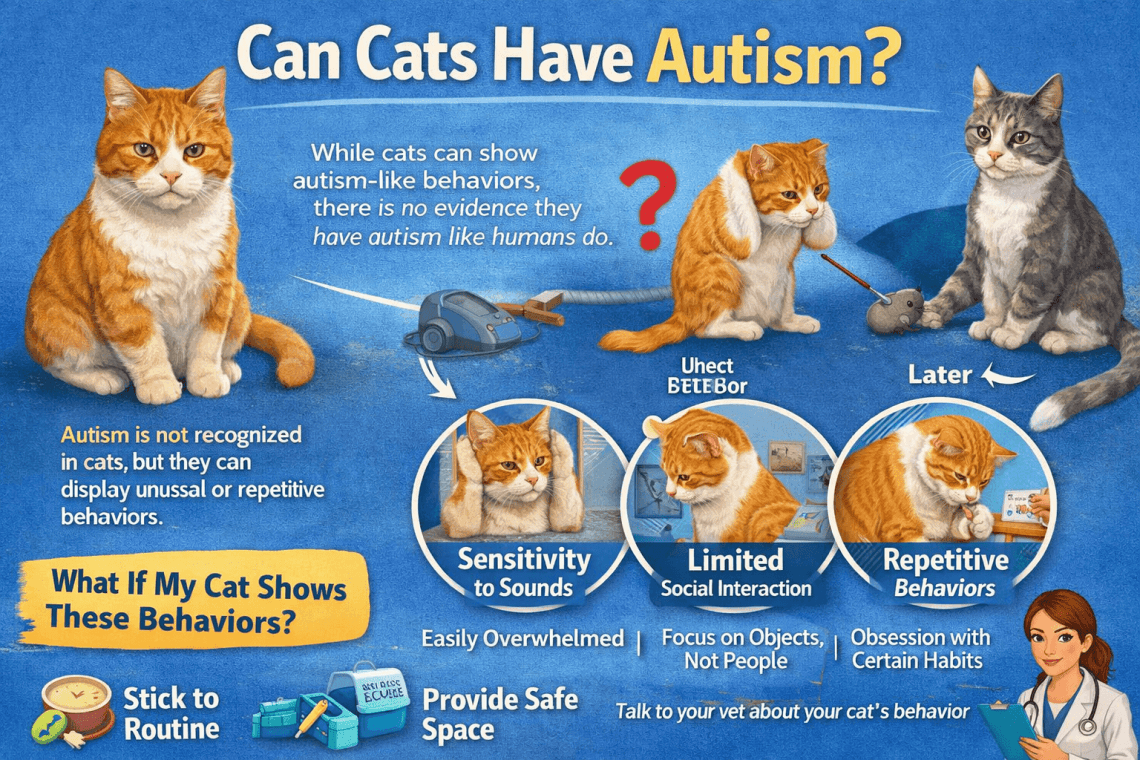
Can Cats Have Autism ? The honest answer to whether cats can have autism is: not in the way humans can. Autism Spectrum Disorder (ASD) is a human diagnosis defined by specific neurological and social criteria. Cats cannot be formally diagnosed with it. But if you’ve noticed that your cat avoids eye contact, reacts intensely to sounds, or seems indifferent to affection, your observations are valid and there are real scientific explanations for why some cats behave that way. This article walks through what’s actually going on, what the research says, and what you can do to help.
Table of Contents
What is autism? Can Cats Have Autism?
Autism Spectrum Disorder is a neurodevelopmental condition diagnosed in humans based on a specific set of criteria persistent challenges with social communication, restricted or repetitive behaviors, and sensory processing differences that appear in early childhood. The diagnosis requires detailed behavioral assessment using tools developed specifically for human cognition and social development.
The key word is “spectrum.” ASD presents very differently from person to person, which is partly why people look at their cats whose behaviors also vary widely and see similarities. Some autistic people are highly sensitive to noise or touch, prefer routine, and find social interaction draining. Sound familiar for some cats?
The overlap in descriptions is real, but the underlying neuroscience is not equivalent. Cats evolved entirely different social structures and communication systems. A behavior that looks similar on the surface can have a completely different biological origin.
Scientific position
No veterinary or behavioral science body has established diagnostic criteria for autism in cats. The term “feline autism” does not appear in peer-reviewed veterinary literature as a recognized condition.
Why do some cats seem autistic?
The behaviors that prompt owners to ask “can cats have autism?” are real they just have different explanations in feline behavioral science.
Cat sensory sensitivity
Cats have dramatically more sensitive sensory systems than humans. Their hearing range extends to 79,000 Hz (humans top out around 20,000 Hz). They have a specialized organ in the roof of their mouth the vomeronasal organ for detecting chemical signals humans can’t perceive at all. A cat flinching at a sound you can barely hear isn’t experiencing a disorder. It’s experiencing the world with equipment designed for a very different level of input.
Some cats, however, show sensory reactivity that goes beyond typical feline ranges. They may startle easily, refuse to be touched on certain body parts, or become overwhelmed in environments that most cats handle without issue. This heightened cat sensory sensitivity is real and worth taking seriously but it’s more accurately described as anxiety or a stress-related response than autism.
Cat social behavior explained
Cats are not pack animals. Unlike dogs, who evolved alongside humans over thousands of years of cooperative social living, cats domesticated themselves largely on their own terms. Their social behavior is facultative meaning they can be social, but they don’t need it the way dogs and humans do.
A cat that prefers to be alone, avoids strangers, or bonds intensely with one person while ignoring everyone else is not showing autistic behavior. It is showing typical feline social behavior. The question of “are cats autistic” often reflects a misunderstanding of how cat social structures actually work.
Signs your cat may have unusual behavioral traits
While “autism” isn’t the right label, some cats do display behavioral patterns that fall outside typical ranges. These are worth noticing and discussing with a vet:
- Extreme avoidance of all human contact, even after years in a home
- Intense, disproportionate reactions to everyday sounds or movement
- Repetitive behaviors pacing the same path, repetitive vocalizations, or compulsive grooming
- No interest in play, even as a young cat
- Strong attachment to rigid routines visible distress when anything changes
- Avoiding eye contact even with familiar people they seem to trust
- Difficulty self-regulating after a stressful event (prolonged hiding, extended aggression)
- Sensory overload responses fleeing, freezing, or aggression triggered by light touch
- Selective mutism cats that rarely or never vocalize, or vocalize constantly without clear cause
- Disinterest in other cats, including in multi-cat households they’ve lived in for years
Seeing one or two items on this list occasionally is usually within normal variation. A cluster of these behaviors showing up consistently is a reason to look deeper.
What actually causes these behaviors in cats?
This is where cat behavior disorders get their real explanations. Several well-documented conditions can produce behaviors that owners sometimes read as “autistic-like.”
Anxiety and chronic stress
Feline anxiety is far more common than most owners realize. Cats are highly sensitive to environmental change, conflict, and unpredictability. Chronic stress produces a range of behaviors hiding, aggression, repetitive actions, and social withdrawal that can look extreme and puzzling without context. Feline hyperesthesia syndrome, a condition involving rolling skin, sudden aggression, and apparent sensory overload, is a documented disorder that vets can assess and treat.
Early socialization gaps
The socialization window for kittens closes between 7 and 9 weeks of age. Kittens who aren’t gently exposed to humans, handling, varied sounds, and different environments during this window often become fearful or avoidant adults. This isn’t a neurological condition it’s a developmental one. It doesn’t mean the cat is broken; it means they missed a specific learning window, and patience plus structured positive experience can still help.
Genetics and breed tendencies
Temperament is partly inherited. Certain lines within breeds and some individual cats regardless of breed are simply wired to be more reactive, more independent, or more sensitive. This is normal genetic variation, not a disorder.
Trauma or neglect history
Cats that experienced abuse, neglect, or repeated frightening events can develop lasting behavioral changes. Trauma responses in cats share features with anxiety and PTSD in mammals more broadly hypervigilance, startle responses, difficulty trusting and are best addressed with behavioral support and sometimes medication.
Conditions vets can diagnose
- Feline anxiety disorder
- Feline hyperesthesia syndrome
- Obsessive-compulsive disorder (OCD)
- Cognitive dysfunction syndrome
- Fear-based aggression
Conditions vets cannot diagnose
- Autism Spectrum Disorder
- “Feline autism”
- ADHD in cats
- Asperger’s in cats
How to help a cat with unusual behaviors
Whether the underlying cause is anxiety, a socialization gap, or simply a highly independent temperament, most cats with unusual behavioral traits respond well to the same core approach:
Reduce environmental stressors
Identify what triggers your cat’s difficult behaviors and reduce exposure where possible. Consistent routines, quiet spaces to retreat to, and predictable feeding times all reduce the overall stress load on a sensitive cat.
Use positive reinforcement only
Punishment including raised voices, spray bottles, or forced handling makes fear-based and anxiety-driven behaviors significantly worse. Reward calm behavior with treats and let your cat set the pace for interaction.
Enrich their environment
Puzzle feeders, climbing structures, window perches, and opportunities for controlled outdoor stimulation (a secure catio or leash walks for willing cats) reduce stress and provide appropriate sensory input.
Consider pheromone support
Synthetic feline pheromone diffusers (like Feliway) have solid evidence behind them for reducing anxiety-related behaviors in cats. They’re not a cure, but for many cats they noticeably reduce reactivity.
Key principle
Progress with a highly sensitive or avoidant cat is measured in weeks and months, not days. Consistency matters more than any single technique.
Should you get your cat evaluated?
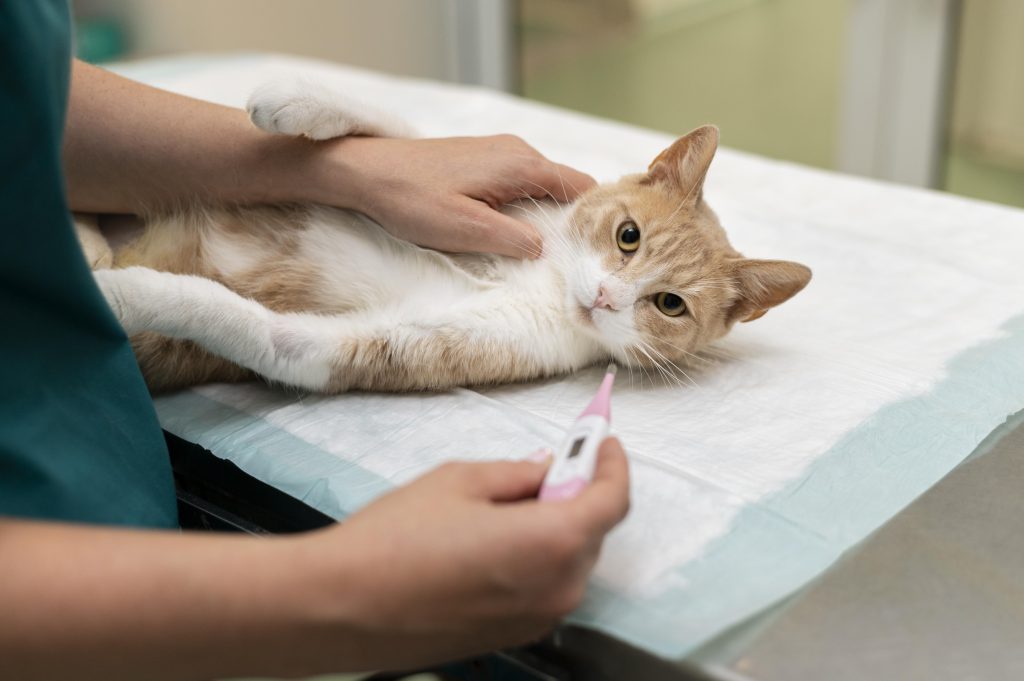
If your cat’s behavior is causing them visible distress or making it difficult for them to eat, sleep, or feel safe a vet evaluation is the right move. Your vet can rule out medical causes (pain and thyroid issues both affect behavior significantly) and refer you to a board-certified veterinary behaviorist if needed.
A veterinary behaviorist can assess whether your cat has a diagnosable condition like anxiety, OCD, or feline hyperesthesia syndrome, and create a management plan that may include behavioral modification, environmental changes, or medication.
You don’t need to use the word “autism” to get your cat the right help. Describing what you observe specifically and without labels gives your vet the most useful information.
Frequently asked questions
Do cats have autism?
Not in any medically recognized sense. Autism Spectrum Disorder is a human diagnosis with specific criteria that cannot be applied to cats. Cats can, however, have anxiety disorders, sensory sensitivities, and behavioral conditions that may look similar on the surface.
Are cats autistic if they avoid eye contact?
No. Avoiding eye contact is actually normal and polite behavior in cat communication. A direct stare is a threat signal in feline body language. A cat that looks away from you is often expressing comfort, not avoidance.
Why is my cat antisocial?
Most antisocial behavior in cats traces back to limited socialization as a kitten, anxiety, past trauma, or simply a naturally independent temperament. It’s rarely a sign of illness unless it develops suddenly in a previously social cat in which case a vet check is warranted.
Do cats have mental disorders?
Yes, cats can develop anxiety, OCD-like compulsive behaviors, cognitive dysfunction (similar to dementia in older cats), and stress-related conditions. These are real, diagnosable, and treatable. They just aren’t the same conditions as human psychiatric diagnoses.
Can a cat be tested for autism?
No. There is no test for autism in cats because the condition is not recognized in veterinary medicine. A veterinary behaviorist can assess your cat for anxiety, compulsive disorder, or other behavioral conditions that might explain what you’re seeing.
Is my cat’s repetitive behavior a sign of a problem?
Mild repetitive behaviors (like a set grooming routine) are normal. Compulsive repetitive behaviors excessive grooming that causes hair loss, constant pacing, or repetitive vocalizations are worth discussing with a vet, as they can indicate chronic stress or a compulsive disorder.
Can cats with unusual behaviors live happy lives?
Absolutely. Many cats with anxiety, sensory sensitivity, or limited socialization thrive with the right environment and patient owners. Understanding your cat’s specific needs rather than trying to make them fit a more typical mold is the most effective approach.
The bottom line
Can Cats Have Autism? Cats cannot be diagnosed with autism, but the behaviors that make owners ask the question are real and worth understanding. Your cat’s aloofness, sensory reactivity, or rigid routines have genuine explanations rooted in feline neuroscience, developmental history, and individual temperament. The most helpful thing you can do is observe closely, reduce stress where you can, and consult a vet or veterinary behaviorist when behaviors affect your cat’s quality of life.

Zingi is a digital content creator and pet enthusiast with a passion for helping animal lovers make smarter, more informed decisions. With hands-on experience researching dog breeds, pet care routines, and tech products, Zingi writes guides that cut through the noise and focus on what actually matters for everyday pet owners and tech users.