Your dog is sneezing more than usual. Maybe there’s a runny nose and a little lethargy. Your first thought? Did my dog just catch a cold? It’s one of the most common questions dog owners search and the answer is yes, dogs can get colds.
This article walks you through exactly what dog cold symptoms look like, what causes them, when you need a vet, and what you can safely do at home to help your dog feel better.
🐾 Quick Answer
Yes, dogs can get colds. Dog colds are caused by different viruses than human colds, but the symptoms look very similar sneezing, runny nose, watery eyes, and low energy. Most cases are mild and clear up on their own in 5–10 days. If symptoms are severe or don’t improve, see your vet.
Table of Contents
Can Dogs Get Colds?
Yes, dogs absolutely get colds. Your dog can experience upper respiratory infections that look and feel a lot like the cold you’d get. Sneezing, congestion, a runny nose, watery eyes it’s all on the table.
That said, the experience isn’t identical to yours. Dog colds are usually caused by canine-specific pathogens, not the rhinovirus strains that hit humans every winter.
Is It the Same Cold Virus Humans Get?
No. The viruses behind human colds mainly rhinoviruses do not infect dogs. Your dog has its own set of cold-causing culprits. Canine parainfluenza virus and Bordetella bronchiseptica are two of the most common offenders.
This is actually good news: your sneezing dog almost certainly didn’t catch it from you, and you’re not going to catch it from them either.
Dog Cold Symptoms to Watch For
Knowing the signs early makes a real difference. Dog cold symptoms can range from barely noticeable to pretty miserable, and most fall somewhere in the middle.
Symptoms That Are Usually Mild
These are the signs that typically show up first and tend to resolve without treatment:
- Sneezing (frequent or in bursts)
- Clear nasal discharge
- Watery or slightly goopy eyes
- Mild cough
- Reduced energy or interest in play
- Slightly reduced appetite
Most dogs with these symptoms are uncomfortable but not in danger.
Symptoms That Need Vet Attention
Some signs cross the line from “monitor at home” into “call the vet today.” Watch out for:
| Symptom | Why It’s Concerning |
|---|---|
| Thick yellow or green discharge | Could indicate bacterial infection |
| Laboured or noisy breathing | May signal pneumonia or bronchitis |
| High fever (over 103°F / 39.4°C) | Needs veterinary assessment |
| Coughing that won’t stop | Could be kennel cough or something more serious |
| Loss of appetite for 24+ hours | Risk of dehydration and rapid decline |
| Lethargy lasting more than 2 days | May indicate a more serious illness |
What Causes Colds in Dogs?
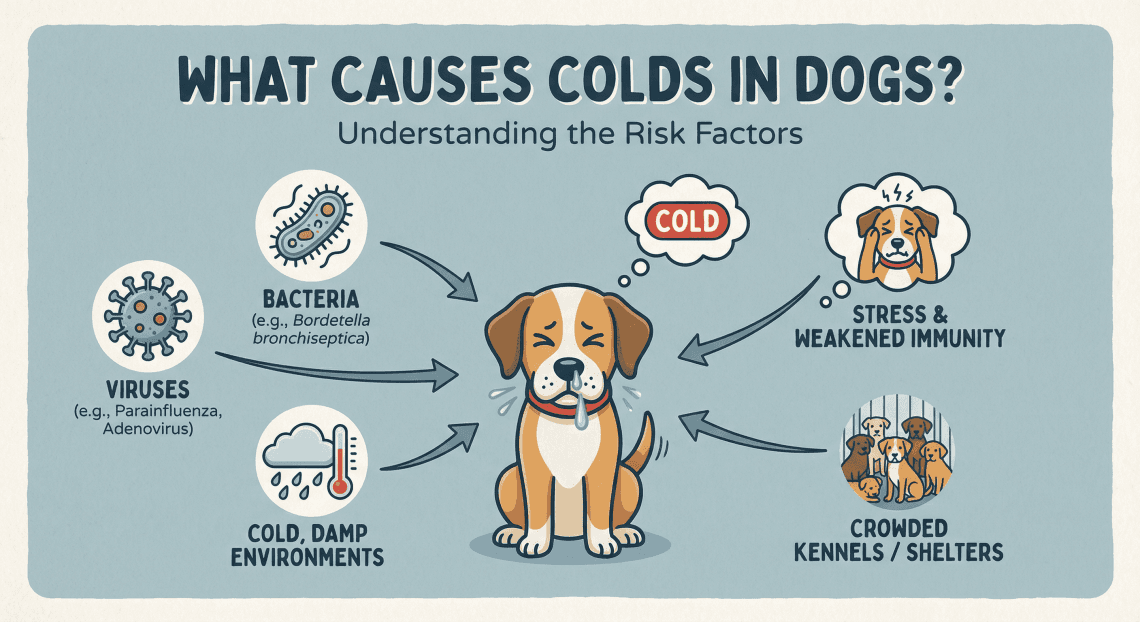
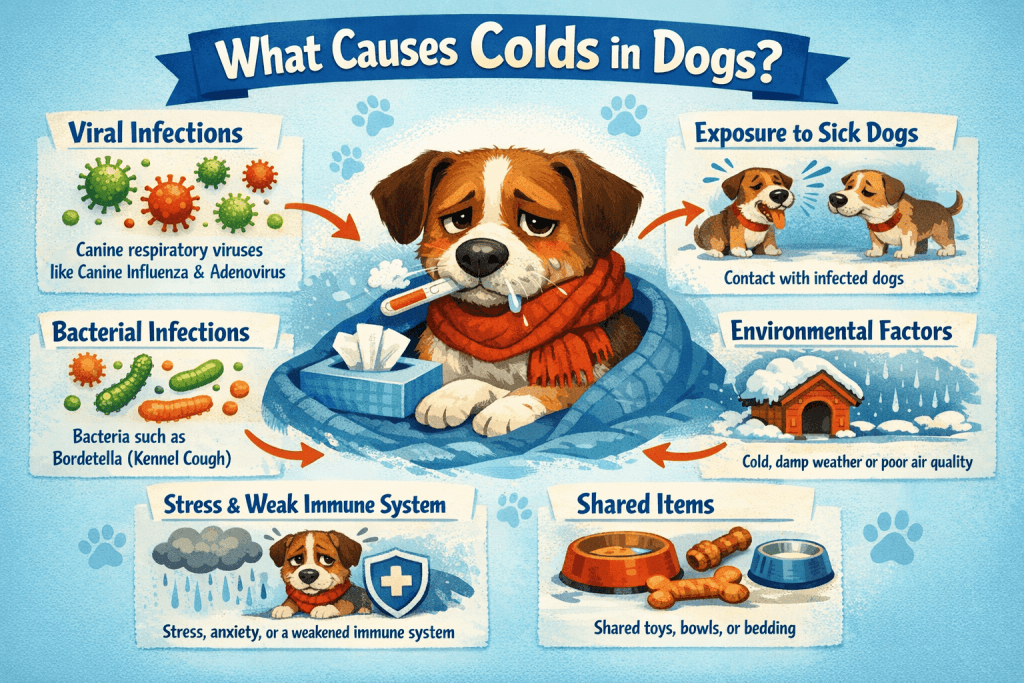
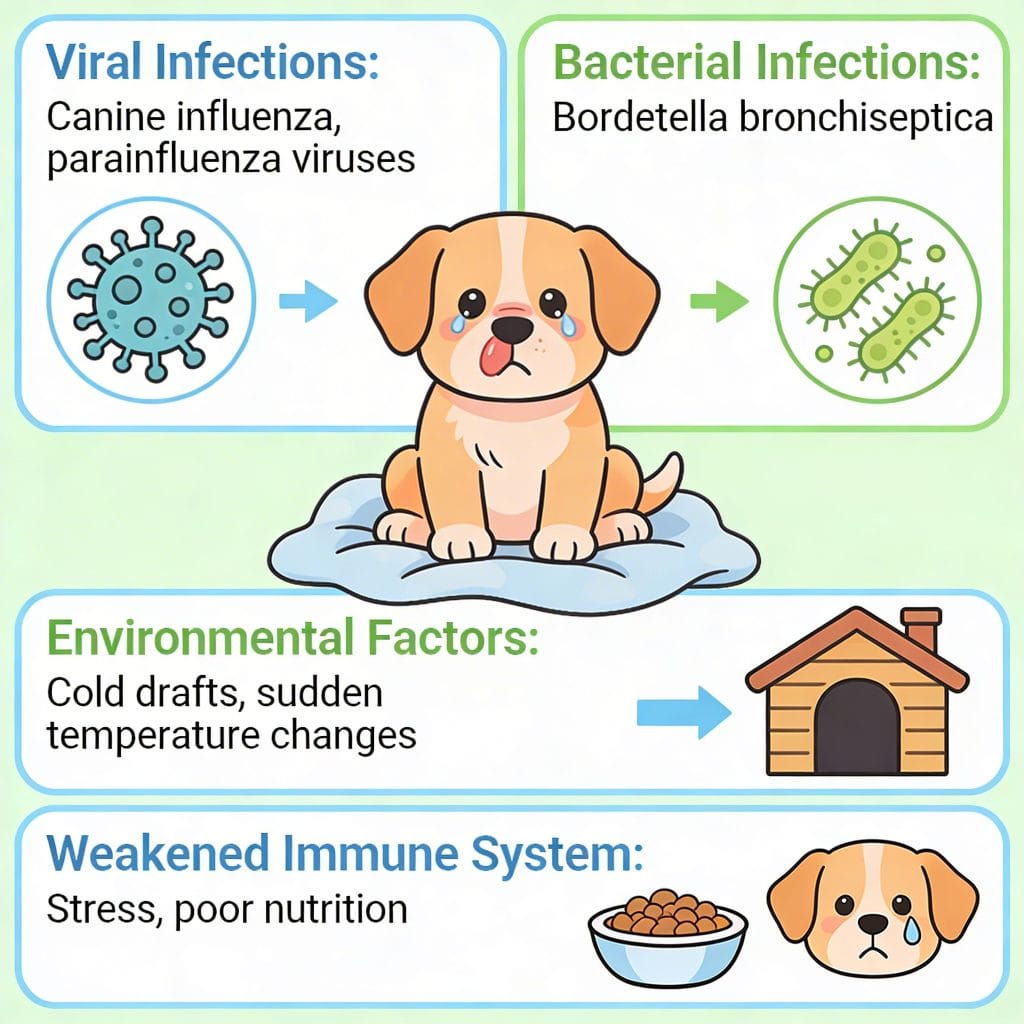
Dog colds are caused by viral or bacterial infections that target the upper respiratory tract. The immune system fights back, and those symptoms you see the sneezing, the discharge are actually signs your dog’s body is working.
According to the American Veterinary Medical Association (AVMA), upper respiratory infections are among the most common illnesses in domestic dogs, particularly those that spend time around other dogs.
Common Viruses and Bacteria Involved
Several pathogens are known to cause cold-like illness in dogs:
- Canine parainfluenza virus – very common, spreads easily between dogs
- Bordetella bronchiseptica – the main bacteria behind kennel cough
- Canine adenovirus type 2 – can cause respiratory symptoms
- Canine respiratory coronavirus – distinct from COVID-19, affects dogs only
- Mycoplasma – a bacterial cause of respiratory infections in dogs
Many cases involve more than one pathogen at once – this is called a co-infection, and it can make symptoms worse.
Can Dogs Get Colds from Humans – or Give Them?
This is one of the most common worries, so here’s the short answer: dogs cannot catch colds from humans, and humans cannot catch colds from dogs. The viruses are species-specific.
If you’re sick and your dog seems to get sick around the same time, it’s almost certainly a coincidence. Your dog likely picked up their own bug from another dog, a shared space, or the environment.
That said, dogs can catch colds from other dogs very easily. Parks, kennels, doggy daycare, and grooming facilities are the highest-risk environments. If a dog there is infected, respiratory droplets spread fast.
Which Dogs Are More at Risk?
Most healthy adult dogs fight off cold viruses without much trouble. But some dogs are more vulnerable than others.
Brachycephalic Breeds
Flat-faced breeds – like Bulldogs,French Pugs, French Bulldogs, and Shih Tzus already have compromised airways. When a respiratory infection hits, it hits harder. These dogs may struggle more with congestion and are at higher risk of complications.
If your dog is brachycephalic, don’t wait to see if cold symptoms “clear up.” Check in with your vet sooner.
Puppies and Senior Dogs
Young puppies have immature immune systems. Senior dogs often have reduced immune function. Both groups are more likely to develop complications from what starts as a simple cold including pneumonia or secondary bacterial infections.
Dogs with existing health conditions heart disease, diabetes, or compromised immune systems also fall into the higher-risk category.
When to See a Vet
Most dog colds don’t require a vet visit. But knowing when to go is critical.
Book an appointment if your dog:
- Has symptoms lasting more than 10 days
- Develops a fever above 103°F (39.4°C)
- Shows thick coloured nasal or eye discharge
- Struggles to breathe or breathes noisily
- Stops eating or drinking for more than a day
- Is a puppy, senior, or has a pre-existing condition
When in doubt, call your vet’s office. They can often advise over the phone whether you need to come in or whether home monitoring is appropriate.
⚠️ Never give your dog human cold medicine products containing acetaminophen (paracetamol), ibuprofen, or xylitol are toxic to dogs. Your vet can confirm which treatments, if any, are safe.
How to Help Your Dog Feel Better at Home
If your dog has mild cold symptoms and your vet has confirmed it’s safe to monitor at home, there’s plenty you can do.
Home Comfort Tips
- Keep them warm and rested. Limit exercise until symptoms improve.
- Make sure they’re drinking. Offer fresh water frequently. Mild dehydration makes everything worse.
- Add humidity. A humidifier near their resting area can ease congestion. Even bringing your dog into a steamy bathroom for 10–15 minutes can help open up their airways.
- Feed easily digestible food. If appetite is low, try warming their food slightly to make it more appealing.
- Wipe their nose gently. Use a soft cloth to clean discharge and keep them comfortable.
What Not to Do
- ❌ Do not give human cold or flu medicine
- ❌ Do not force exercise let them rest
- ❌ Do not delay the vet if symptoms worsen
- ❌ Do not take a sick dog to the dog park they can still spread illness to other dogs
FAQ
Can dogs get colds from humans?
No, dogs cannot catch colds from humans. Human cold viruses (mainly rhinoviruses) are species-specific and don’t infect dogs. If your dog develops cold symptoms while you’re sick, it’s coincidental. Your dog most likely picked up a canine respiratory virus from another dog or a shared environment. The two illnesses just happened to overlap in timing.
How long does a dog cold last?
Most dog colds resolve within 5–10 days. Mild cases often clear up faster. If your dog’s symptoms haven’t improved after 10 days or get worse at any point that’s your signal to see a vet. Secondary bacterial infections can develop if a cold drags on, and these typically need antibiotic treatment.
Can dogs catch colds from other dogs?
Yes, very easily. Dog cold viruses spread through respiratory droplets sneezing, coughing, shared water bowls, and direct nose-to-nose contact. High-contact environments like kennels, dog parks, and grooming salons carry higher risk. If your dog has recently been in any of these settings and develops symptoms, that’s likely where they picked it up.
What are the signs of a cold in a dog?
Common dog cold symptoms include sneezing, runny nose, watery eyes, mild cough, and low energy. Most dogs stay alert and continue eating, just with reduced enthusiasm. If your dog develops thick green or yellow discharge, a high fever, or difficulty breathing, those symptoms go beyond a typical cold and warrant a vet visit.
Should I take my dog to the vet for a cold?
Not always but sometimes yes. Mild symptoms in an otherwise healthy adult dog can usually be monitored at home for a few days. You should see a vet if symptoms are severe, last more than 10 days, or if your dog is a puppy, senior, or has health issues. When in doubt, a quick phone call to your vet is always the right move.
Can I give my dog cold medicine?
No, never give your dog human cold medicine. Many over-the-counter products contain ingredients that are toxic to dogs, including acetaminophen (paracetamol), ibuprofen, and xylitol. Only give your dog medications that your vet has specifically approved and dosed for them. There are no safe human cold remedies to repurpose for dogs.
Wrapping Up
So can dogs get colds? Yes, they can. Dog colds are caused by canine-specific viruses and bacteria, they look a lot like human colds, and most cases are mild enough to manage at home with rest and fluids. The good news is your dog didn’t catch it from you, and you won’t catch it from them.
The most important thing you can do is know the difference between a cold that’s running its normal course and one that needs professional attention. Keep a close eye on your dog’s symptoms for the first few days, make sure they’re comfortable and hydrated, and don’t hesitate to call your vet if anything feels off. When it comes to your dog’s health, your instincts as an owner matter.

Zingi is a digital content creator and pet enthusiast with a passion for helping animal lovers make smarter, more informed decisions. With hands-on experience researching dog breeds, pet care routines, and tech products, Zingi writes guides that cut through the noise and focus on what actually matters for everyday pet owners and tech users.