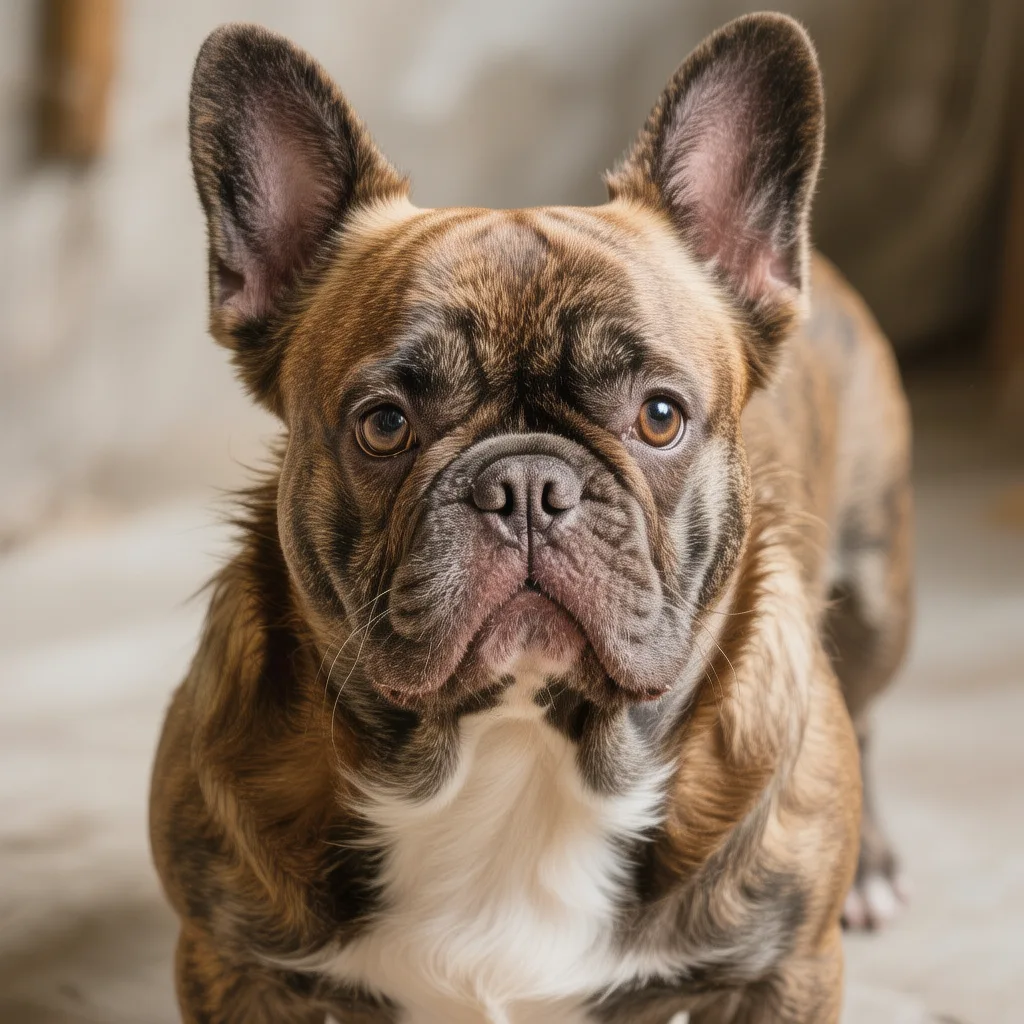
You’ve probably seen one on Instagram and done an immediate double-take. A long haired French Bulldog has all the squished face, bat ears, and chunky body you’d expect from a Frenchie but with a soft, flowing coat that makes them look like a completely different dog. They’re not a mix. They’re not a new designer breed. They’re just a Frenchie carrying a rare genetic secret.
This guide covers everything: the gene behind the long coat, what these dogs look like, how they differ from standard Frenchies in care and health, and what to know before buying a long haired French Bulldog puppy.
⚡ Quick Answer A long haired French Bulldog is a purebred French Bulldog carrying two copies of a recessive FGF5 gene mutation that produces a longer, softer coat. They have identical temperament and the same brachycephalic health considerations as standard Frenchies. The coat is the only meaningful difference. Expect to pay significantly more than a standard Frenchie fluffy French Bulldogs are rare and in high demand.
Table of Contents
1. What Is a Long Haired French Bulldog?
A long haired French Bulldog sometimes called a fluffy Frenchie or fluffy French Bulldog is a purebred French Bulldog with a longer, softer coat than the breed standard describes. Everything else about the dog is completely standard Frenchie: same structure, same temperament, same health profile.
Purebred or Designer Dog?
This is probably the most common question people have when they first encounter one. The answer is straightforward: a true long haired French Bulldog is 100% purebred. The longer coat comes from a naturally occurring recessive gene mutation that exists within the French Bulldog gene pool not from crossbreeding with another long-haired breed.
That said, not every dog sold as a “fluffy Frenchie” is genuinely purebred. The high price tag has attracted unscrupulous sellers who cross Frenchies with other breeds to produce a fluffy-looking puppy and sell it at a premium. DNA testing is the only way to verify what you’re actually buying.
A Brief History of the Fluffy Frenchie
Long haired French Bulldogs aren’t a new invention the gene responsible for their coat has always existed quietly in the breed. For most of the breed’s history, carriers were simply bred out or went unnoticed because the trait only shows when a puppy inherits two copies of the recessive gene.
As rare color and coat variations became fashionable in the Frenchie community over the past decade, breeders began deliberately pairing known carriers to produce fluffy puppies. Demand exploded almost immediately. What was once an accidental quirk became one of the most sought-after variations in the entire breed.
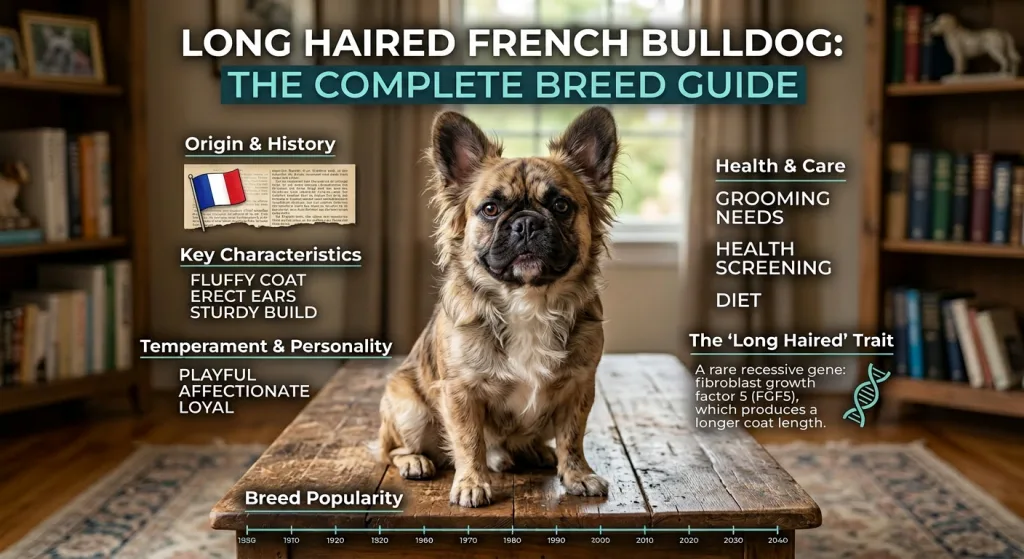
2. The Science Behind the Long Hair Frenchie Gene
The long hair Frenchie gene has a specific name and a well-documented mechanism. Understanding it helps explain why these dogs are rare and why two completely normal-looking Frenchies can suddenly produce a fluffy puppy.
What the FGF5 Mutation Actually Does
The longer coat in fluffy French Bulldogs is caused by a mutation in the FGF5 gene fibroblast growth factor 5. In its normal form, this gene signals hair follicles to stop growing after a certain length. When a dog carries two mutated copies of the gene, that stop signal is essentially switched off, allowing the coat to grow longer than it normally would.
This same mutation appears across many dog breeds it’s responsible for long coats in Dachshunds, Corgis, and even some Golden Retriever lines. In French Bulldogs, it produces the signature feathery ears, longer body fur, and soft chest ruff that define the fluffy look.
How Two Short-Haired Parents Can Produce a Fluffy Puppy
Because the FGF5 mutation is recessive, a dog only needs one copy to be a “carrier” and carriers look completely normal. Two short-haired Frenchies who each carry one copy of the mutation have a 25% chance of producing a long haired puppy in any given litter.
This is why fluffy puppies sometimes appear without warning in litters from breeders who weren’t expecting them. It’s also why reputable breeders now use DNA testing to identify carriers before pairing dogs.
Gene Combination Outcomes Table
| Parent 1 | Parent 2 | Fluffy Puppies Expected |
|---|---|---|
| Non-carrier (nn) | Non-carrier (nn) | 0% – no fluffy possible |
| Carrier (nL) | Non-carrier (nn) | 0% fluffy – 50% carriers |
| Carrier (nL) | Carrier (nL) | 25% fluffy – 50% carriers |
| Fluffy (LL) | Non-carrier (nn) | 0% fluffy – 100% carriers |
| Fluffy (LL) | Carrier (nL) | 50% fluffy – 50% carriers |
| Fluffy (LL) | Fluffy (LL) | 100% fluffy |
L = mutated FGF5 allele (long coat); n = standard allele (short coat)
3. What Does a Fluffy French Bulldog Actually Look Like?
The difference between a standard and a fluffy French Bulldog is immediately obvious once you know what you’re looking at but it’s subtler than most people expect from photos.
Coat Texture, Length, and Feathering
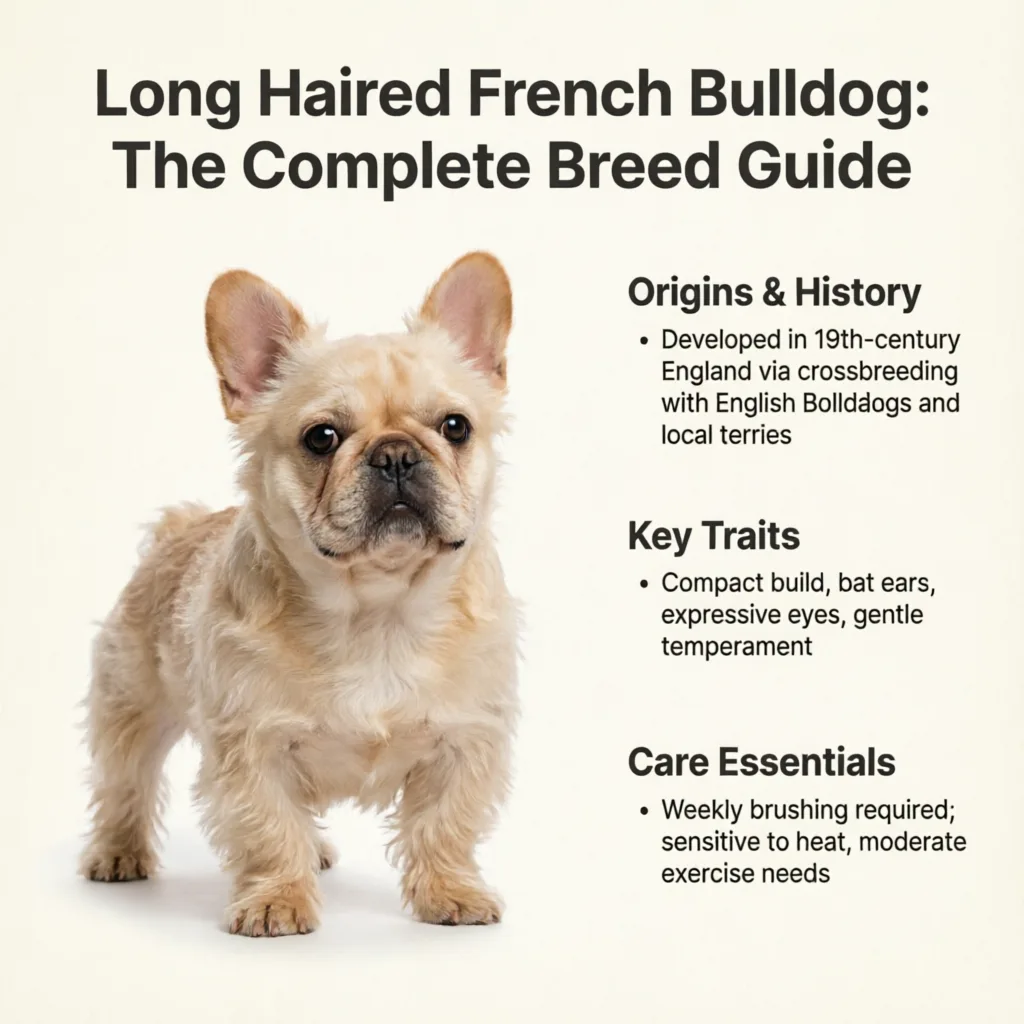
The coat on a long haired French Bulldog isn’t dramatically long the way a Shih Tzu or Afghan Hound is long. It’s more of a medium-length softness typically 2–4 cm longer than a standard Frenchie coat, with the most noticeable growth around:
- The ears – soft feathering along the edges that frames the face
- The chest and neck – a fuller ruff that gives a slightly lion-like appearance
- The legs and paws – gentle feathering, more noticeable in motion
- The tail area – longer fur that accentuates the naturally short Frenchie tail
The texture is softer and silkier than a standard Frenchie’s smooth, dense coat. Running your hand over one is noticeably different.
Colors and Patterns in Long Haired French Bulldogs
The long haired French Bulldog breed comes in every color variation that standard Frenchies do plus some of the “exotic” colors that have become popular in recent years:
- Standard colors: Fawn, brindle, white, pied (white with patches)
- Exotic colors: Blue (grey), chocolate, lilac, merle, tan points, cream
- Rare combinations: Blue merle, lilac tan, chocolate merle
Note: many of the exotic color variations merle, lilac, blue are not recognized by the AKC or FCI breed standard. They exist and are genuinely produced by some breeders, but they often come with additional health considerations and a significantly higher price tag.
How to Tell a True Fluffy From a Mixed Breed
Three things point to a genuine long haired French Bulldog rather than a mix:
- DNA test results confirming two copies of the FGF5 mutation and full French Bulldog breed composition
- Physical conformation matching standard Frenchie structure correct bat ears, compact body, screw tail
- Documented pedigree from a reputable breeder with health-tested parents
A suspiciously low price, vague breeding history, or a breeder who resists DNA testing are all reasons to walk away.
4. Long Haired French Bulldog Temperament and Personality
Here’s the good news for anyone worried the fluffy coat comes with a personality upgrade or downgrade: it doesn’t. A long haired French Bulldog is, behaviorally, just a French Bulldog.
Are They Different From Standard Frenchies?
The FGF5 gene affects only coat length it has no documented influence on temperament, drive, or behavior. Your fluffy Frenchie will be just as stubborn, just as affectionate, just as clownish, and just as obsessed with sitting on your lap as any other Frenchie.
French Bulldogs as a breed rank consistently high for adaptability and affection in assessments by organizations like the American Kennel Club. They’re low-energy indoors, moderately playful, and deeply people-focused. They do not do well left alone for long periods fluffy or not.
How They Do With Kids, Other Dogs, and Cats
French Bulldogs generally do well with:
- Children – patient and sturdy enough for gentle play; supervision still recommended with very young kids
- Other dogs – typically sociable, especially with dogs they’ve grown up with
- Cats – usually fine after a proper introduction; low prey drive means most Frenchies and cats reach a workable truce quickly
For more on pairing French Bulldogs with other pets and navigating multi-pet households, our complete French Pug dog guide covers mixed-breed temperament considerations in detail.
5. Health, Grooming, and Care
Owning a long haired French Bulldog means understanding two things clearly: the coat needs more maintenance than a standard Frenchie, and the underlying brachycephalic health issues are exactly the same regardless of how the coat looks.
Brachycephalic Health Issues – Still Very Real
French Bulldogs are a brachycephalic breed meaning their flat face creates structural challenges in the airway, eyes, and skin folds. According to a 2016 study published in Canine Genetics and Epidemiology, French Bulldogs are predisposed to a specific cluster of conditions known collectively as Brachycephalic Obstructive Airway Syndrome (BOAS). These include:
- Narrowed nostrils (stenotic nares)
- Elongated soft palate
- Narrowed trachea
- Exercise and heat intolerance
These issues affect all French Bulldogs equally the long coat doesn’t protect against them or make them worse. What the longer coat does add is an extra consideration in hot weather: fluffy Frenchies may overheat slightly faster, so shade, cool environments, and limited exercise in heat are even more important.
Grooming a Long Haired Frenchie
A standard Frenchie needs almost no brushing. A fluffy French Bulldog needs noticeably more coat maintenance:
- Brush 2–3 times per week to prevent tangles, especially around the ears and chest feathering
- Bathe every 3–4 weeks using a gentle, dog-appropriate shampoo
- Check skin folds regularly – the longer coat can trap moisture against wrinkled skin, increasing the risk of fold dermatitis
- Ear cleaning weekly – the feathered ears trap debris more easily than a standard Frenchie’s smooth ears
Common Health Issues to Watch For
| Health Issue | Signs to Watch |
|---|---|
| BOAS (airway issues) | Noisy breathing, snoring, exercise intolerance |
| Skin fold dermatitis | Redness, odor, discharge in facial or body folds |
| Eye conditions | Redness, discharge, squinting, cloudiness |
| Hip dysplasia | Reluctance to jump, stiffness after rest |
| Ear infections | Head shaking, scratching at ears, odor |
| Heat stress | Excessive panting, drooling, lethargy in warm conditions |
When to See a Vet
🐾 When to See a Vet: Book an appointment promptly if your long haired French Bulldog shows labored or noisy breathing at rest, persistent skin redness inside the folds, eye discharge that doesn’t clear within 24 hours, or any sign of heat distress. BOAS symptoms in particular tend to worsen over time without intervention surgical correction is available and often dramatically improves quality of life. Don’t wait to see if breathing difficulties resolve on their own.
6. Long Haired French Bulldog Puppies – What to Know Before Buying
A long haired French Bulldog puppy is one of the most expensive domestic dog purchases you can make. Going in informed protects both your wallet and the puppy’s welfare.
How Much Does a Fluffy French Bulldog Cost?
Prices vary by location, color, and breeder reputation but as a general guide:
| Variation | Approximate Price (US) |
|---|---|
| Standard fluffy (fawn, brindle, pied) | $5,000 – $8,000 |
| Exotic color fluffy (blue, chocolate) | $8,000 – $15,000 |
| Rare color fluffy (lilac, merle, tan point) | $15,000 – $30,000+ |
French Bulldogs in general are expensive to breed because most females require artificial insemination and C-section delivery due to the breed’s narrow hips. Add the rarity of the fluffy gene and the cost climbs fast.
How to Find a Responsible Breeder
A reputable long haired French Bulldog breed specialist will:
- DNA test both parents for the FGF5 gene and provide documentation
- Health test for common Frenchie conditions (cardiac, hip, eye screening)
- Allow you to visit and meet at least one parent in person
- Provide a health guarantee and be reachable after the sale
- Not have puppies available immediately – reputable breeders have waiting lists
Red Flags to Avoid
Walk away from any breeder who:
- Cannot provide DNA test results confirming the fluffy gene
- Sells puppies under 8 weeks of age
- Advertises multiple litters available at all times
- Pressures you to pay a deposit before you’ve asked any questions
- Cannot tell you what health testing the parents have had
Puppy mills and backyard breeders have flooded the fluffy Frenchie market specifically because of the prices involved. Due diligence here isn’t optional it’s the difference between a healthy companion and a dog with serious, expensive health problems from day one.
FAQ
Are long haired French Bulldogs purebred? Yes a true long haired French Bulldog is 100% purebred. The longer coat comes from a naturally occurring recessive FGF5 gene mutation within the French Bulldog gene pool, not from crossbreeding. However, mixed-breed dogs are sometimes sold as fluffy Frenchies at high prices. Always request DNA test results confirming full French Bulldog composition before purchasing.
What gene causes the long hair in French Bulldogs? The long hair in French Bulldogs is caused by a recessive mutation in the FGF5 gene fibroblast growth factor 5. In its mutated form, this gene fails to signal hair follicles to stop growing at the standard length. A puppy must inherit two copies of the mutated gene one from each parent to display a long coat.
How much does a long haired French Bulldog cost? Standard fluffy French Bulldogs typically cost between $5,000 and $8,000 in the US. Exotic colors like blue or chocolate push prices to $8,000–$15,000. Rare combinations such as lilac merle or chocolate tan can exceed $30,000. High prices reflect the rarity of the gene, the cost of DNA testing, and the expense of breeding French Bulldogs generally.
Do fluffy French Bulldogs have more health problems? Not because of the coat itself. Fluffy French Bulldogs carry the same brachycephalic health risks as all Frenchies breathing difficulties, skin fold issues, eye conditions, and heat intolerance. The longer coat can trap moisture in skin folds and may increase overheating risk in hot weather, but the core health profile is identical to a standard French Bulldog.
Can two short-haired French Bulldogs have a long haired puppy? Yes and it happens more often than people expect. If both parents carry one copy of the recessive FGF5 mutation, there’s a 25% chance each puppy will inherit two copies and display a long coat. Both parents will look completely normal. This is why DNA testing of breeding dogs matters it lets breeders predict and plan for fluffy puppies deliberately.
Are long haired French Bulldogs recognized by the AKC? No. The AKC breed standard for French Bulldogs specifies a short, smooth coat. A long haired French Bulldog cannot be shown in AKC conformation classes under the breed standard. This doesn’t affect their status as purebred dogs they can still be AKC registered but they are disqualified from conformation showing. FCBR and some independent registries are more accommodating of coat variation.
The Real Takeaway
A long haired French Bulldog is one of the most visually striking dogs you’ll encounter but underneath that soft, feathery coat is still a standard Frenchie with all the personality, stubbornness, and health considerations that come with the breed. The coat is genuinely beautiful. Just make sure you’re buying from someone who can prove what’s actually in it.
For a broader look at French Bulldog mix temperaments and what life with a Frenchie-type dog actually looks like day to day, our complete French Pug dog guide is a solid next read.
Zingi is a digital content creator and pet enthusiast with a passion for helping animal lovers make smarter, more informed decisions. With hands-on experience researching dog breeds, pet care routines, and tech products, Zingi writes guides that cut through the noise and focus on what actually matters for everyday pet owners and tech users.