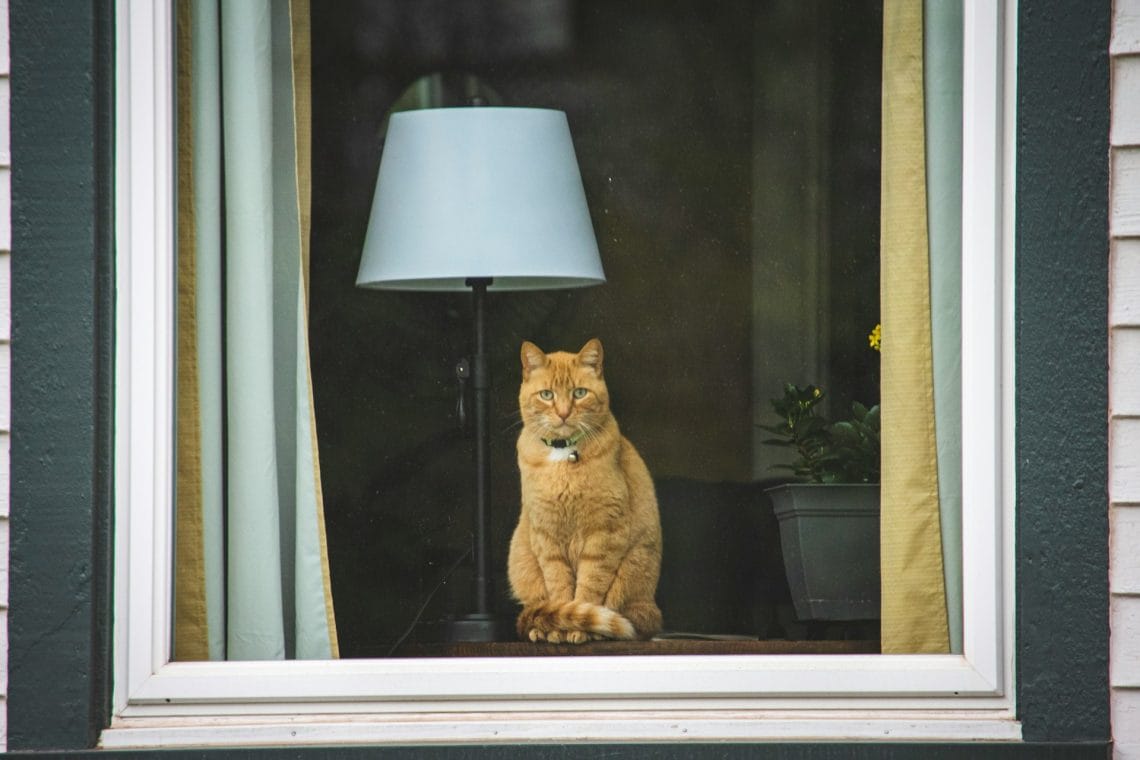
When it comes to indoor cat vs outdoor cat, the safety difference is significant and the data consistently favors indoor living. Indoor cats live an average of 12–18 years. Outdoor cats, by most veterinary estimates, live just 2–5 years. That gap isn’t random. It reflects the very real and daily risks that outdoor life exposes cats to risks that have nothing to do with how capable or street-smart your cat is. That said, the indoor vs outdoor cat debate isn’t purely black and white, and understanding the full picture helps you make the best decision for your specific cat and circumstances.

Table of Contents
Indoor vs Outdoor Cat Lifespan: What the Numbers Say
The indoor vs outdoor cat lifespan difference is one of the most striking statistics in feline medicine and one that surprises many cat owners when they first encounter it.
Indoor cats routinely live into their mid-to-late teens. Cats kept exclusively indoors with good veterinary care commonly reach 15–18 years, and cats living into their early twenties are not unusual. The oldest reliably documented cat, Creme Puff of Austin, Texas, lived to 38 years old entirely indoors.
Outdoor cats face a fundamentally different risk profile. Even in suburban or rural areas with relatively low traffic, the combination of road accidents, predators, disease exposure, and territorial conflict compresses average lifespan dramatically. Estimates of 2–5 years for free-roaming outdoor cats are cited consistently across veterinary literature, though cats in very safe rural environments with attentive owners may fare better than that average suggests.
The lifespan gap exists not because indoor cats are coddled into fragility, but because outdoor cats face a steady accumulation of serious hazards any one of which can be fatal on a single bad day. Indoor cats, by contrast, tend to die of age-related conditions: kidney disease, hyperthyroidism, cancer, and cognitive decline illnesses that are manageable over months or years rather than sudden and traumatic.
Outdoor Cat Risks: What Your Cat Actually Faces Outside
The outdoor cat risks are specific, documented, and worth knowing in detail because “the outdoors” can sound abstractly dangerous without understanding what that means day to day.
Traffic is the leading cause of death in outdoor cats in urban and suburban areas. Cats have fast reflexes but no concept of vehicle speed. Even a quiet residential street carries real risk, and roads are more dangerous at night when many cats roam most actively.
Predators vary by region but are a genuine threat in most of North America, the UK, and Australia. Coyotes are the primary predator threat in North America and have become well-established in suburban areas. Dogs both strays and poorly restrained owned dogs injure and kill cats regularly. In rural areas, foxes, large birds of prey, and in some regions larger predators present real danger.
Infectious disease exposure increases dramatically outdoors. Feline leukemia virus (FeLV), feline immunodeficiency virus (FIV), feline infectious peritonitis (FIP), and upper respiratory infections all spread through contact with other cats contact that outdoor cats have routinely. Even a vaccinated cat carries elevated risk compared to one with no exposure.
Parasites fleas, ticks, ear mites, roundworm, hookworm, and tapeworm are far more prevalent in outdoor cats. These aren’t just inconveniences. Flea infestations in kittens can cause fatal anemia. Ticks carry Lyme disease and other serious illnesses. Regular parasite prevention helps but doesn’t eliminate risk.
Toxic substances are everywhere outdoors. Antifreeze is highly attractive to cats and lethal in small amounts. Rodenticides (rat poison) can kill a cat that eats a poisoned rodent a phenomenon called secondary poisoning. Pesticides, herbicides, and garden chemicals are encountered on lawns and in neighbor’s yards with no warning.
Other cats represent a specific risk category. Territorial fights lead to bite wounds that frequently abscess and, if untreated, can become life-threatening. Cat bites are among the most infection-prone wounds in veterinary medicine because of the bacteria in feline mouths. FIV is transmitted almost exclusively through bite wounds.
Getting lost or stolen is a risk many owners underestimate. Cats that roam can be taken in by well-meaning strangers, impounded by animal control, or simply become disoriented far from home.

The Case for Outdoor Access: What Cats Gain Outside
A fair assessment of the indoor cat vs outdoor cat question requires acknowledging what outdoor access genuinely provides.
Sensory enrichment outdoors is richer than almost anything replicable inside. Fresh air, natural smells, birdsong, variable terrain, and live prey stimulation engage a cat’s senses in ways that indoor environments however enriched don’t fully match.
Physical exercise comes naturally outdoors in a way that requires deliberate effort to replicate inside. Climbing, stalking, running across variable terrain, and exploring large spaces provide muscle use and cardiovascular engagement that pacing a flat apartment doesn’t.
Mental stimulation from unpredictable environments new smells, changing weather, novel encounters provides cognitive engagement that may reduce boredom-related behavioral problems.
Behavioral expression of natural instincts hunting, territory marking, climbing, and exploring is uninhibited outdoors. Cats denied all outlet for these behaviors can develop stress, frustration, and anxiety-related problems including overgrooming, aggression, and litter box avoidance.
This is the honest case for outdoor access and it’s real. The question isn’t whether outdoors has value for cats, but whether that value outweighs the documented risks. For most cats in most environments, the risks are substantially higher than the benefits. But for some cats in some circumstances, thoughtful outdoor access may be the right call.
The Compromise: Outdoor Access Without Full Free-Roaming
The binary of indoor cat vs outdoor cat isn’t the only option. Several approaches provide outdoor enrichment while managing the most serious risks.
Leash and harness walking is the most controlled option. Cats can be trained to accept a harness especially if started young and a daily walk provides real outdoor enrichment under your supervision. It eliminates traffic risk, predator risk, disease transmission, and getting lost entirely.
Catios enclosed outdoor enclosures are one of the most effective solutions available. A well-designed catio can be anything from a window box to a large garden enclosure with tunnels, platforms, and sheltered areas. Your cat gets sun, air, smells, and bird-watching. They cannot be hit by a car, attacked by a dog, exposed to sick cats, or encounter rodenticides. The upfront cost is offset by reduced vet bills and the peace of mind of knowing exactly where your cat is.
Supervised outdoor time in a secured garden works for some cats in some gardens. It requires a genuinely secure perimeter cat-proof fencing systems exist specifically for this and active supervision. It’s more practical in rural and suburban settings than urban ones.
Cat-proof garden fencing systems use roller bars or inward-angled extensions that cats cannot climb over. Combined with a secure gate, they allow garden access with substantially reduced escape risk. They don’t prevent exposure to wildlife that enters the garden, but they stop the cat from leaving.
For cat owners in urban apartments, the catio or leash-walking option are the most realistic compromises. For those with houses and gardens, secured garden access is achievable with investment.
Indoor Cats: Making Inside Life Rich Enough
If you choose to keep your cat exclusively indoors or circumstances make it the only practical option the responsibility is on you to provide enough stimulation that indoor life doesn’t become a source of chronic boredom and frustration.
What indoor cats need:
- Vertical space cat trees, shelves, and window perches that allow climbing, height, and territory surveying
- Hunting-based play daily sessions with wand toys, puzzle feeders, and moving targets that engage predatory instincts
- Window access a bird feeder positioned outside a window your cat can watch provides hours of passive enrichment
- Scratching surfaces adequate, correctly positioned scratching posts prevent furniture damage and meet a real behavioral need
- Social interaction indoor cats depend entirely on their human household for social stimulation; they need daily engaged interaction, not just coexistence
- Environmental novelty rotating toys, new scents from outside (a bag that’s been outdoors, fresh herbs), cardboard boxes, and paper bags maintain novelty
- A second cat for social cats, a compatible feline companion dramatically reduces boredom and loneliness, particularly in households where humans are away during the day
The indoor cat that lacks enrichment develops real problems obesity, anxiety, aggression, and compulsive behaviors. An enriched indoor life isn’t a luxury, it’s a baseline requirement for a cat that will never experience the natural world directly.
When to See a Vet
If your cat has outdoor access or has recently been outside, certain situations warrant prompt veterinary attention:
- Bite wounds – even small puncture wounds from cat fights can abscess rapidly and become serious within 24–48 hours; they often look minor on the surface while tracking deep
- Limping or sudden lameness – may indicate a road accident, fall, or fight injury
- Sudden lethargy after outdoor time – possible toxin ingestion, injury, or illness
- Vomiting after eating prey – occasional vomiting is normal, but repeated episodes or blood in vomit needs investigation
- Wounds, scrapes, or fur loss – signs of a fight or predator encounter that may need treatment
- Any outdoor cat showing respiratory symptoms – sneezing, discharge, labored breathing as these spread rapidly between cats and can indicate serious viral infection
For newly adopted outdoor cats transitioning to indoor life, a full veterinary workup on arrival including FeLV and FIV testing, parasite screening, and vaccination review is standard practice and worth doing before the cat integrates with other pets in the home.

Frequently Asked Questions
What is the life expectancy difference between indoor and outdoor cats? Indoor cats typically live 12–18 years. Outdoor cats average 2–5 years by most veterinary estimates. The gap reflects cumulative exposure to traffic, predators, disease, toxins, and territorial conflict rather than any inherent weakness of indoor cats.
Are outdoor cat risks really that serious? Yes and they’re not evenly distributed by location. Urban cats face traffic as the primary danger. Suburban cats face coyotes and dogs with increasing frequency as wildlife adapts to developed areas. Rural cats face both, plus a wider range of predators. No outdoor environment is low-risk for a domestic cat.
Can I train an adult cat to stay indoors? Yes, though it takes patience. Cats that have been outdoor cats for years may protest the transition loudly for weeks. Increasing indoor enrichment dramatically before restricting outdoor access helps. The transition is almost always worth it for safety, but it requires commitment.
Is it cruel to keep a cat indoors? Not if the indoor environment is properly enriched. A cat with climbing opportunities, daily play, window access, and social interaction can thrive indoors. What’s unkind is keeping a cat in a barren, unstimulating environment indoors or outdoors.
What is a catio and does it work? A catio is an enclosed outdoor space for cats ranging from a window-mounted cage to a large garden enclosure. It provides real outdoor access sun, air, smells, bird-watching while preventing the cat from roaming freely. It’s one of the most practical and effective compromises available.
Do outdoor cats need more vet care? Significantly more. Outdoor cats need parasite prevention year-round, are more likely to need treatment for wounds and abscesses, have higher exposure to infectious disease, and are at greater risk of traumatic injury. The cost of outdoor cat vet care over a lifetime typically far exceeds the cost of a quality catio.
Should I let my kitten go outside? Most vets recommend keeping kittens indoors until they are fully vaccinated, neutered or spayed, and microchipped typically around 4–6 months. Many owners who intend to transition kittens outdoors find the transition becomes harder as the cat ages and the risks become more apparent.
What is the safest way to give a cat outdoor access? A secured catio or cat-proof garden enclosure eliminates most serious risks while providing genuine outdoor enrichment. Leash walking is safe and effective for cats trained to accept a harness. Unsupervised free-roaming carries the highest risk regardless of neighborhood.

The Bottom Line
The indoor cat vs outdoor cat decision comes down to a genuine trade-off: enrichment and behavioral expression versus documented, serious physical risk. The data on outdoor cat lifespan is hard to argue with. A 12–18 year indoor life versus a 2–5 year outdoor one isn’t a marginal difference it’s most of a cat’s natural lifespan.
The best answer for most cats in most situations is neither pure indoor monotony nor unrestricted outdoor access, but a thoughtfully enriched indoor life with supervised or secured outdoor time built in. That combination gives your cat the sensory richness they need without gambling their life on a quiet-looking street.
For more on creating an enriching home environment for your cat at every life stage, check out.
Photo by Jon Sailer on Unsplash
Zingi is a digital content creator and pet enthusiast with a passion for helping animal lovers make smarter, more informed decisions. With hands-on experience researching dog breeds, pet care routines, and tech products, Zingi writes guides that cut through the noise and focus on what actually matters for everyday pet owners and tech users.