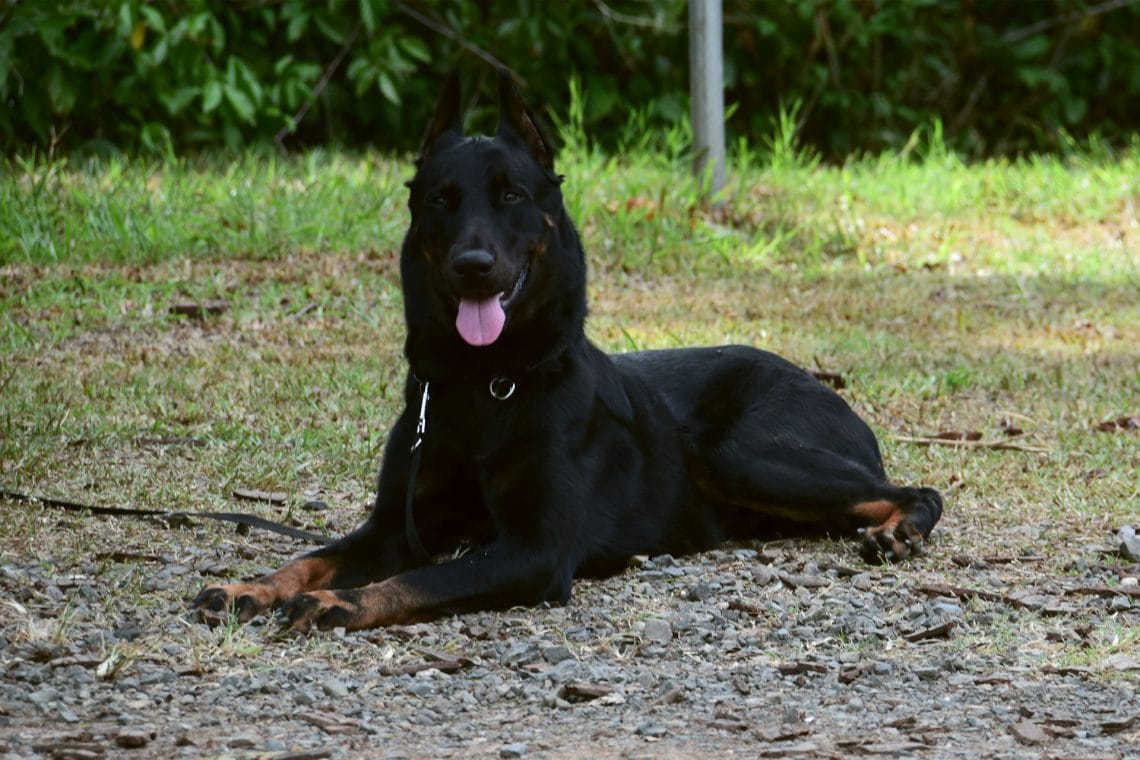
The Beauceron is one of those breeds that stops people cold. Big, black-and-tan, muscular most people assume they’re looking at a Doberman or a Rottweiler mix. Then they spot the double dewclaws on the hind legs, and suddenly nothing adds up. That’s the Beauceron: visually familiar, but actually a rare and distinctly French working dog with a history going back to the 1500s.
This isn’t a beginner’s breed. It’s not a casual weekend companion. But for the right owner someone experienced, active, and genuinely interested in having a working partnership with their dog the Beauceron may be one of the most rewarding breeds you’ll ever meet.
Here’s what you actually need to know.
Table of Contents
What Is a Beauceron? Breed Overview and History
The Beauceron (pronounced “boh-SAIR-on”) is a French herding and livestock guardian breed, officially known as the Berger de Beauce Shepherd of the Beauce, named after the flat agricultural plains southwest of Paris. Its earliest documented records date to Renaissance manuscripts from 1578, making it one of France’s oldest working breeds.
For centuries, a single Beaucerons would move flocks of 200 to 300 sheep covering up to 50 miles per day without showing signs of fatigue. That kind of endurance wasn’t bred by accident. The dog you bring home today carries every bit of that genetic work ethic.
In 1893, veterinarian Paul Megnin formally distinguished the short-coated Beauceron from the long-coated Briard, and the Club des Amis du Beauceron was established in 1922. The breed served in both World Wars, relaying messages through trenches, detecting landmines, and guarding defensive positions roles that highlighted intelligence and courage under pressure.
One more historical note worth knowing: the Doberman Pinscher is widely believed to have descended partly from the Beaucerons. The physical resemblance isn’t a coincidence.
Quick Breed Stats:
- Height: 24–28 inches
- Weight: 65–110 lbs (males slightly larger)
- Lifespan: 10–12 years
- Coat: Short, dense double coat black & tan or harlequin (gray/black/tan)
- AKC Group: Herding
- Also Known As: Berger de Beauce, Bas Rouge (Red Stockings), Beauce Shepherd, French Shorthaired Shepherd
The nickname “Bas Rouge” Red Stockings in French comes from the rich tan markings that run from the paws up the lower legs. It’s one of the breed’s most striking visual features.
Suggestion: French dog breeds that make exceptional working dogs →
Beauceron Temperament: What Living With One Actually Feels Like
Let’s be direct: the Beauceron is not easygoing. This is a dog that will test your leadership daily not aggressively, but persistently. They’re observant, they remember everything, and if they sense you’re inconsistent, they will simply take charge themselves. Not out of malice. That’s just what working dogs do.
That said, the Beauceron’s temperament is layered and often misunderstood. With their family, they’re deeply affectionate, sensitive even. Many Beauceron owners describe them as emotionally perceptive the kind of dog that reads your mood before you’ve said a word. They bond hard to their people and don’t enjoy being left alone for long stretches.
Core temperament traits:
Loyal and protective. The Beauceron takes its guardian role seriously. They’re naturally wary of strangers not aggressive, but watchful. With proper early socialization, this wariness stays healthy and calibrated. Without it, it can tip into overprotective behavior that’s genuinely difficult to manage in a dog this size and this confident.
Intelligent sometimes frustratingly so. These dogs learn fast. Commands? They’ll have it in two sessions. The challenge is that they also figure out inconsistencies in your training just as quickly. If you let something slide once, they’ve filed it away. This isn’t the breed for variable rules.
High energy and work-oriented. A bored Beauceron is a problem Beauceron. They need a job whether that’s herding, agility, nose work, tracking, protection sports, or structured obedience. Without mental and physical outlets, they’ll create their own entertainment, and it won’t be the kind you enjoy.
Gentle with their family, including children. A well-socialized Beauceron raised with children tends to be patient and protective with them. The caveat: their size and exuberance make close supervision necessary around toddlers and very young kids. They may also attempt to herd small children, which is instinctual but requires redirection.
Suggestion: Best large dog breeds for active families with kids →
Is the Beauceron Right for You? Honest Assessment
Most breed guides soften this answer. This one won’t.
The Beauceron is not recommended for first-time dog owners. Not because it’s dangerous, but because its combination of intelligence, drive, physical power, and independence requires a handler who already understands dog behavior and training fundamentals. A Beauceron with an uncertain or inconsistent owner doesn’t become calm it becomes the pack leader in a house where no one wanted that outcome.
The Beauceron thrives with:
- Experienced dog owners with a background in working or herding breeds
- Active individuals or families who exercise 1.5–2 hours daily
- People with access to a large fenced yard or rural property
- Owners interested in dog sports, protection work, or structured training
- Families without very young toddlers, or those willing to manage interactions carefully
The Beauceron struggles with:
- Apartment living without exceptional daily exercise commitment
- Long periods alone (8+ hours regularly)
- Passive or inconsistent handlers
- Homes with small animals prey drive is present and requires management
- First-time dog owners, regardless of research level
Suggestion: Working dog breeds ranked by trainability and energy level →
Beauceron Training: How to Actually Get Results
Training a Beauceron is rewarding when you approach it correctly and genuinely frustrating when you don’t. The good news: they want to work with you. The challenge: they need you to be worth working with.
Start early. Socialization and basic obedience should begin the day the puppy arrives home. The window between 8 and 16 weeks is particularly important for shaping a Beauceron’s response to strangers, new environments, and other animals. Skip this window and you’re building on sand.
Use positive reinforcement but be structured. The Beauceron responds well to praise, play, and food rewards. What they don’t respond to is repetitive drilling without purpose. Keep sessions short (10–15 minutes), high-value, and varied. This breed notices when training becomes mechanical.
Be the most consistent person in the room. Commands are not suggestions. “Sit” means sit now, not sit when convenient. The Beauceron tests this regularly, especially during adolescence (which runs long in this breed they can be puppyish until age 2–3).
Professional classes are worth it. Even experienced owners benefit from group training classes, especially for socialization purposes. A Beauceron seeing other dogs, strangers, and unpredictable environments in a controlled setting is a Beauceron that generalizes good behavior outside the home.
Consider protection sports and dog sports. Schutzhund/IPO, French Ring, herding trials, agility, and nose work all give the Beauceron a legitimate outlet for its drive. Dogs engaged in structured sport work tend to be far more settled at home.
Suggestion: Dog sports for high-energy breeds: a beginner’s guide →
Exercise and Mental Stimulation Needs
The Beauceron needs serious daily exercise not a lap around the block. Plan for a minimum of 90 minutes to 2 hours of vigorous activity per day. That means real exercise: running, hiking, structured play, off-leash work in a secure area, or active training sessions.
Mental stimulation matters as much as physical exercise for this breed. A Beauceron that’s been on two walks but hasn’t been asked to think is still a restless Beauceron. Puzzle feeders, training sessions, tracking games, and interactive toys all help burn the cognitive energy this dog carries.
In short: if your lifestyle doesn’t have room for a highly active, intellectually engaged dog, the Beauceron will be miserable and so will you.
Beauceron Health: What to Watch For
The Beauceron is generally a hardy, healthy breed with fewer heritable conditions than many large dogs. That said, a few health issues appear with enough frequency to warrant attention.
Hip Dysplasia. Common in large breeds, this joint malformation can cause pain and mobility problems. Reputable breeders test breeding stock with OFA or PennHIP evaluations. Always ask for documentation.
Gastric Dilatation-Volvulus (Bloat). This life-threatening condition where the stomach twists after filling with gas affects deep-chested large breeds disproportionately. Know the signs: restlessness, unproductive retching, distended abdomen. It requires immediate emergency veterinary care.
Osteochondrosis Dissecans (OCD). A developmental joint condition that can affect the shoulder, elbow, or hock. More common in fast-growing large breed puppies fed inappropriate diets or over-exercised before skeletal maturity.
Progressive Retinal Atrophy (PRA). Genetic testing is available; ethical breeders screen for this.
Practical health considerations:
- Feed from a raised or ground-level bowl? Ground-level is currently recommended by most veterinary sources for bloat risk management
- Avoid intense exercise immediately before or after meals
- Schedule routine hip evaluations at 2 years old
- Lifespan: 10–12 years with good care
Grooming the Beauceron: Simpler Than You’d Think
Given the Beauceron’s imposing double coat, most people assume grooming is a major undertaking. It’s actually not. The short, dense outer coat repels mud and debris reasonably well, and routine maintenance is minimal compared to long-coated breeds.
What the routine looks like:
- Weekly brushing with a rubber curry or slicker brush keeps the coat healthy and removes loose fur
- Seasonal shedding in spring and fall is more significant daily brushing during these periods helps considerably
- Bathing: Every 6–8 weeks, or when genuinely dirty
- Ears: Check weekly for debris or signs of infection
- Nails: Monthly trimming; this breed’s double dewclaws on the hind legs need attention they don’t wear down naturally and can overgrow and curl into the skin if neglected
The double dewclaws are not cosmetic. They’re a breed-defining trait recognized in the breed standard and should not be removed. They do require regular trimming and monitoring.
Beauceron vs. Doberman: Clearing Up the Confusion
The resemblance is real black and tan, muscular, alert, roughly the same height. People mistake them constantly. Here’s how to tell them apart and what the differences mean practically.
| Beauceron | Doberman Pinscher | |
|---|---|---|
| Origin | France (1500s) | Germany (1890s) |
| Coat | Short, dense double coat | Short, smooth single coat |
| Double Dewclaws | Yes (breed standard) | No |
| Build | Heavier, more substantial | Leaner, more refined |
| Temperament | More laid-back with family | More alert and stoic |
| Trainability | High, but independent | High, more handler-focused |
| Colors | Black/tan, harlequin | Black/rust, blue/rust, fawn/rust, red/rust |
| Rarity | Rare (especially in US) | Common, popular breed |
The relationship runs deeper than appearance: historians widely believe the Beauceron contributed to the Doberman’s development. You’re not looking at two similar breeds you’re looking at an ancestor and a descendant.
Suggestion: Doberman Pinscher breed guide: temperament, training, and care →
Beauceron Puppy Price: What to Expect
The Beauceron is a rare breed, particularly in the United States, and pricing reflects that. From a reputable breeder, expect to pay between $1,200 and $3,000 for a puppy with documented health testing. Working-line dogs from accomplished breeders particularly those with protection sport or herding credentials can run $3,000 to $5,000 or more.
Budget beyond the purchase price. First-year ownership costs typically run $3,000–$4,000 when factoring in supplies, training, and veterinary care. Annual ongoing costs average around $1,800–$2,000. Lifetime cost of ownership runs $20,000–$25,000 across a 10–12 year lifespan.
Finding a reputable Beauceron breeder:
- The American Beauceron Club (ABC) maintains a breeder referral network
- Look for OFA health testing documentation for both parents
- Expect a waiting list responsible breeders don’t have puppies constantly available
- Be suspicious of unusually low prices or breeders who don’t ask you questions
Adoption is possible but uncommon for this breed. Rescue fees typically run $200–$500.
5 Things Most Articles Won’t Tell You About the Beauceron
1. The adolescence phase is genuinely long. Most guides mention that Beaucerons mature slowly. What they don’t fully convey is that the 12–30 month window can be a real test of commitment. The dog is physically large and strong but mentally still developing. Stay consistent.
2. They need to be with people. This is not a kennel dog or a backyard dog. Beaucerons that spend most of their time isolated become anxious, destructive, or reactive. They evolved to work alongside humans all day.
3. The double dewclaws trip people up. First-time Beauceron owners sometimes panic thinking the rear dewclaws are an injury. They’re not they’re a breed-defining characteristic. Don’t let any vet talk you into removing them. They’re required by the AKC breed standard.
4. They are rare for a reason. The Beauceron has never been aggressively marketed or popularized for the pet market, partly because the French breeding community has prioritized working ability over commercial appeal. That rarity is a feature, not a bug it’s kept the breed functional and relatively free of the health problems that plague overbred popular breeds.
5. They often read as “Doberman” to strangers. If you live in an area with breed-specific legislation or have a landlord nervous about large dogs, be prepared to explain and document what your dog actually is. Misidentification is common.
FAQs: Beauceron Dog Breed
Are Beaucerons good family dogs? Yes, with conditions. A well-socialized Beauceron raised with children can be an excellent family dog patient, protective, and deeply bonded to its people. Families with toddlers should supervise interactions carefully given the breed’s size and herding instincts. Early and thorough socialization is non-negotiable.
Is the Beauceron a good guard dog? Yes. Their natural wariness of strangers, territorial instinct, and fearlessness make them effective guardians. Unlike purpose-bred guard breeds, the Beauceron retains herding instincts alongside protection behavior they’re less likely to bite unprovoked and more likely to use posturing and presence as deterrents.
How much exercise does a Beauceron need per day? At minimum 90 minutes of vigorous exercise, with most owners reporting closer to 2 hours of combined physical activity and mental work daily. This is a non-negotiable aspect of Beauceron ownership.
What is the difference between a Beauceron and a Briard? Both are French herding breeds that were historically classified together until 1893. The primary difference is coat: Briards have a long, wavy double coat, while Beaucerons have a short, dense one. Temperamentally they share similarities intelligent, loyal, protective but Beaucerons tend to be somewhat more driven and independent.
Are Beaucerons rare in the US? Yes, relatively rare. The AKC registered the breed formally but it remains uncommon compared to similar working breeds. During recent research, only a handful of available puppies could be found through major US listing platforms at any given time. This makes finding a responsible breeder a longer process than for popular breeds.
Do Beaucerons shed a lot? Moderate shedding year-round, heavier during seasonal coat changes in spring and fall. Not a hypoallergenic breed. Weekly brushing manages it adequately outside shedding season.
Can a Beauceron live in an apartment? Technically possible with an exceptional commitment to daily exercise, but not ideal. This breed does best with access to a large fenced yard or regular off-leash exercise. Their energy level and need for space make apartment living challenging for most owners.
Conclusion: The Beauceron Deserves a Specific Kind of Owner
The Beauceron isn’t a trend breed. It’s not going to show up in Instagram pet accounts or breed lists titled “adorable family dogs.” That’s probably fine it keeps the wrong people from trying to own one.
If you have experience with working dogs, an active lifestyle, and genuine interest in building a training relationship with your dog, the Beauceron offers something remarkable: a breed that is deeply intelligent, loyal to the point of self-sacrifice, physically capable of almost anything you’d ask, and genuinely ancient in its working purpose.
That said, do your research, find a responsible breeder, and be honest with yourself about your lifestyle. This dog will be everything you put into it and it will absolutely notice if you don’t.
Photo by Romualdo Olazábal on Unsplash
Zingi is a digital content creator and pet enthusiast with a passion for helping animal lovers make smarter, more informed decisions. With hands-on experience researching dog breeds, pet care routines, and tech products, Zingi writes guides that cut through the noise and focus on what actually matters for everyday pet owners and tech users.