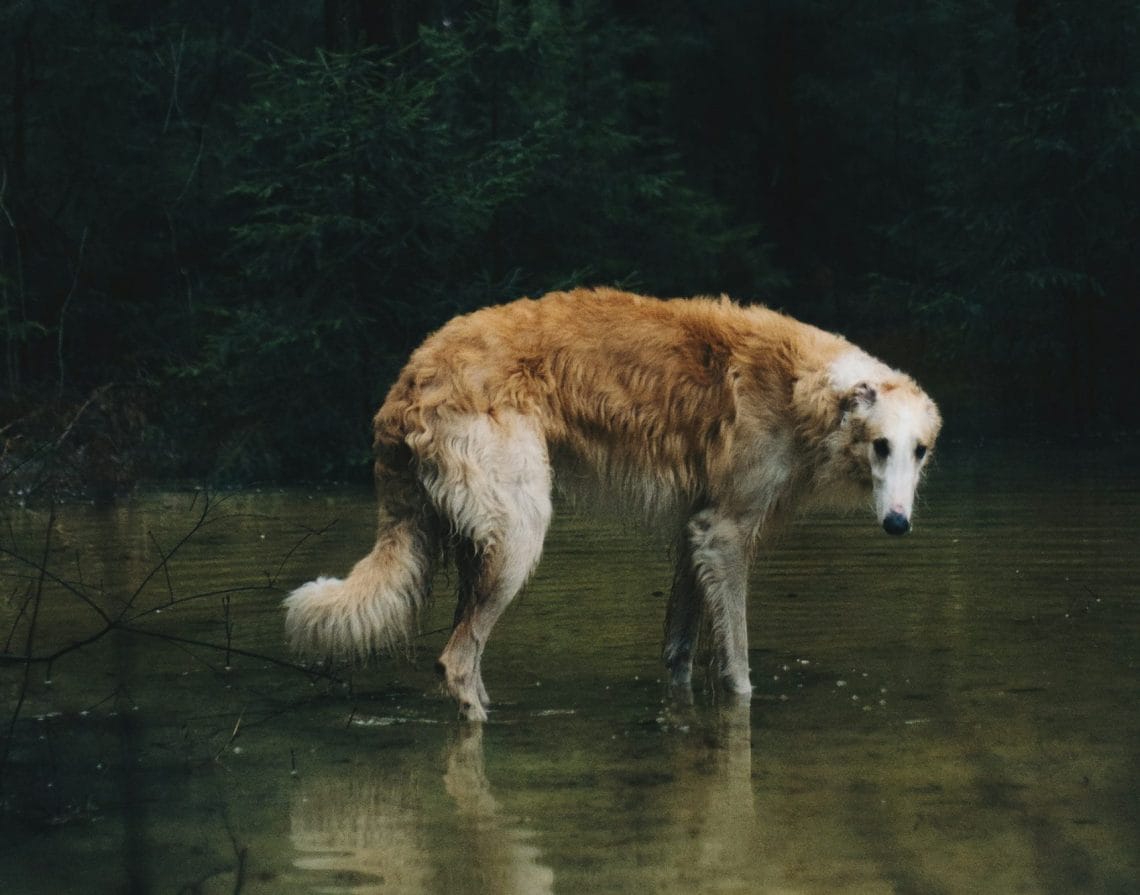
The Borzoi is a large Russian sighthound bred to hunt wolves at speed across open terrain. They’re tall, lean, covered in a silky flowing coat, and have a long narrow skull that gives them a look unlike any other dog breed.
“Borzoi” is a Russian word meaning swift and it’s also the generic Russian term for sighthound. The name fits. These dogs can hit 40 mph and were built to chase down prey that most dogs couldn’t catch on their best day.
But the dog you bring home doesn’t spend much time at 40 mph. Most of the day, a Borzoi is asleep sometimes for up to 18 hours. They’re athletes who have absolutely no problem switching to full couch mode when the run is done. That contrast is part of why people fall in love with them. It’s also part of why some people get one without being ready for what the active side actually looks like.
Table of Contents
Borzoi History: From Russian Nobility to Near-Extinction
Borzois have been around since at least the 13th century. Their roots trace back to the Saluki, which was likely crossed with native Russian sheepdogs and European sighthounds to produce a dog that could handle cold climates while still moving fast enough to course prey.
By the 16th century, the breed was well established in Russia. Hunting with Borzois was the exclusive domain of the aristocracy estate hunts involving hundreds of dogs, horses, and riders were a show of wealth and status as much as anything else. The Russian czars regularly gifted Borzois to visiting European royalty.
Then came the Russian Revolution.
The breed’s association with the nobility made them a target. Borzois were killed alongside the aristocrats who owned them. The breed nearly vanished. What survived in Russia did so because some peasants kept them; what survived elsewhere did so because dogs had already been exported to England and the United States by the late 19th century.
The AKC recognized the breed in 1891, originally under the name “Russian Wolfhound.” The name changed to Borzoi in 1936. Today the breed sits at around 101st in AKC popularity out of 201 breeds not rare, but far from common. Which is honestly part of the appeal for many owners.
What Does a Borzoi Look Like?
Long. Lean. Extraordinarily narrow.
Males stand 28 inches at the shoulder or taller. Females are slightly smaller at 26 inches minimum. Weight runs from about 60 to 110 pounds which surprises people who see them in person, because the slender build makes them look lighter than they are.
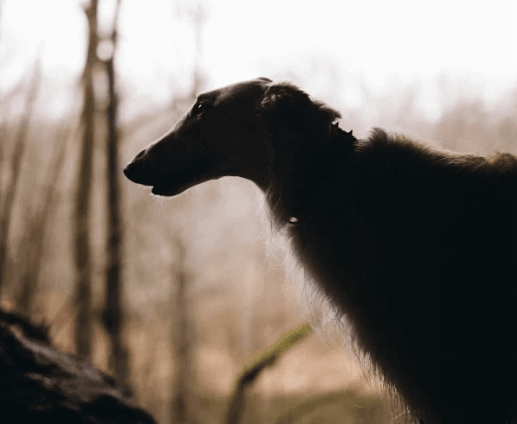
The skull is one of the most distinctive features in dogdom. It’s long, narrow, and slightly domed. That shape gives the Borzoi a 270-degree field of vision compared to the human standard of 180 useful when you need to spot a wolf at distance across flat steppe.
The coat is silky and either flat, wavy, or loosely curled. It feathers heavily along the neck, chest, tail, and legs. Coat colors include white, black, sable, brindle, gold, silver, cream, and a range of combinations. The tail is long, feathered, and serves as a rudder during high-speed turns.
The ears fold back flat at rest and rise slightly when the dog is alert. They’re delicate compared to the body. The overall silhouette long nose, arched back, tucked-up abdomen, deep chest, flowing coat is one of the most recognizable profiles in the dog world.
Borzoi Temperament: What Living with One Is Actually Like
Let’s skip the breed-chart scores and talk about what it’s actually like.
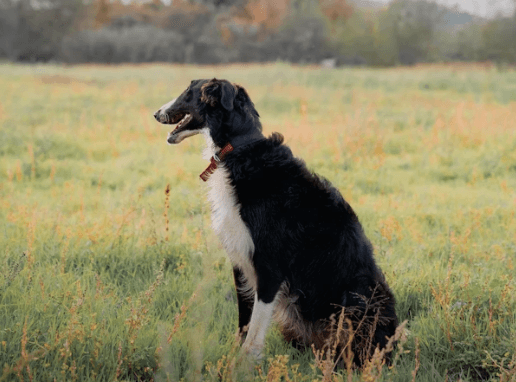
They’re calm indoors. Almost unnervingly calm for a dog their size. Once a Borzoi has had their exercise, they’re looking for a soft surface to collapse on. Many owners joke about tripping over their dog, who has found a way to occupy every comfortable inch of the house.
They’re affectionate with family, reserved with strangers. This is consistent across almost every owner account. A Borzoi isn’t going to greet your house guests enthusiastically. They may disappear to another room. They’re not aggressive about it just clearly uninterested. With their own people, though, they’re gentle and loyal and will lean against you or follow you room to room.
They’re cat-like in their independence. They do what they want, when they want. They’re not looking to you for instructions. They’re thinking their own thoughts. This reads as aloofness to some people and as dignified companionship to others. It’s a personality fit question.
They’re sensitive. This matters for training, for handling, and for the general household atmosphere. Borzois don’t do well with harsh corrections. They don’t do well in chaotic, loud homes. They notice everything and they process it. If something bothers them, you’ll know.
They have a prey drive that doesn’t turn off. Outdoors, a Borzoi is a different animal. If something small runs, they’ll chase it. This isn’t a training problem you can fully solve it’s the core of what they are. A secure fence isn’t optional. Neither is a leash in unfenced areas.
Exercise Needs: More Than You Think
This is where the gap between expectation and reality often appears.
Borzois need real running. Not a walk around the block. Not a backyard trot. At least once or twice a week, they need to sprint full out, open-field running in a safely enclosed area. Daily exercise on top of that should include long walks or active outdoor time.
A 30-minute walk every day without regular sprint opportunities isn’t enough. Under-exercised Borzois get restless and destructive. They’re big enough that restless and destructive means significant damage.
The ideal setup is a large securely fenced yard. The fence needs to be substantial Borzois can clear four feet without breaking stride. Six feet is the recommendation from most breed-experienced owners.
If you live in an apartment, it’s possible, but it requires real commitment to finding secure, open spaces multiple times per week where the dog can actually run. Some breeders will place adult Borzois in apartments; most are hesitant to place puppies there for exactly this reason.
Lure coursing and other sighthound sports are excellent outlets. They’re also a good way to meet other Borzoi owners, which is worth more than it sounds when you’re trying to find a vet who actually knows the breed.
Training a Borzoi: What You’re Getting Into
Borzois are intelligent. The intelligence is just not organized around doing what you say.
They were bred to work independently to make split-second decisions in the field without waiting for handler input. That’s a feature in a hunting dog chasing a wolf across a steppe. It’s a complicating factor when you want a dog that reliably comes when called.
Recall is the biggest challenge. You can build a decent recall indoors and in low-distraction environments. Outdoors, when something runs, that recall evaporates. This is why leash and fence discipline are non-negotiable rather than preferences.
Positive reinforcement works. Harsh methods don’t and not just ethically. Borzois shut down under pressure. They stop engaging. You lose the training relationship and gain nothing.
Short sessions work better than long ones. Boredom is the enemy. They will simply stop participating once they’ve decided the exercise is pointless.
They’re better suited to experienced dog owners. Not because they’re dangerous, but because their independent nature can feel like failure to a first-time owner who isn’t expecting it. Someone who has worked with sighthounds or similarly independent breeds will have more realistic expectations from day one.
Grooming and Coat Care
The coat looks high-maintenance and is, compared to a short-coated breed but it’s more manageable than it appears.
Brushing: Once or twice a week with a pin brush, followed by a comb. Pay attention to the fur behind the ears, which mats easily. During seasonal shedding (usually once a year, or after a heat cycle in intact females), daily brushing is needed.
Bathing: About once a month. The silky coat naturally sheds dirt. Over-bathing strips the natural oils. Use a dog-appropriate dryer getting a coat that thick fully dry matters for skin health.
The coat blow: At some point between 6 and 18 months, puppies shed their entire soft coat to make way for the adult coat. It’s significant. It can look alarming. It’s normal.
Shedding: Moderate most of the year, heavy during coat blows. Expect hair on the furniture and your clothes. A good de-shedding brush and a lint roller become part of the household infrastructure.
Nails: Check and trim regularly. The long legs mean neglected nails change their gait and can cause joint issues over time.
Borzoi Health Problems to Know Before You Buy
The breed has some genuine health concerns worth understanding before committing.
Bloat (Gastric Dilatation-Volvulus): The biggest one. Deep-chested breeds are prone to it, and Borzois have one of the deepest chests in dogdom. Bloat is a life-threatening emergency where the stomach fills with gas and twists. Warning signs include a visibly distended abdomen, unproductive retching, and sudden restlessness or distress. It requires immediate veterinary intervention. Some owners choose prophylactic stomach-tacking (gastropexy) surgery, especially if done at the same time as a spay or neuter.
Degenerative Myelopathy: A progressive spinal cord disease that impairs mobility over time. DNA testing is available for breeding dogs.
Dental problems: The long jaw and specific bite structure can cause crowding and painful dental issues. The Kennel Club lists this as a point of concern for the breed.
Sensitivity to anesthesia: Like many sighthounds, Borzois metabolize anesthesia differently from other breeds due to their low body fat percentage. This is critical information for any vet who hasn’t worked with them before. Make sure your vet is aware and experienced with sighthound-specific protocols.
Drug sensitivities: Related to body composition, they can react poorly to certain medications, particularly anesthetics and some antiparasitic drugs. Worth discussing with your vet upfront.
Lifespan: Typically 9–14 years. For a dog this size, that’s reasonable.
Buy from a health-tested breeder. Most Borzoi health issues are genetic, which means a responsible breeder testing breeding stock makes a real difference in what you bring home.
Borzoi with Kids, Cats, and Other Dogs
Kids: Generally good with older children who understand how to interact with a dog. With very young children, the concern is less temperament and more physics a 90-pound dog moving at speed can knock a toddler over without meaning to. Borzois are also physically sensitive, meaning rough handling from children causes them real discomfort.
Cats: This one is genuinely dog-dependent. Many Borzois live peacefully with cats they were raised alongside, particularly indoor cats who don’t trigger the prey chase. Outdoor cats are a different matter the movement triggers the instinct. Don’t assume a Borzoi that’s good with the household cat will generalize that to a cat in the backyard.
Other dogs: Most Borzois do well with other sighthounds. They often get along fine with other large breeds. With small dogs, the concern is prey drift and accidental injury from size difference rather than aggression. Supervision matters, especially with size-mismatched pairs.
Multi-dog households: Borzois tend to prefer the company of their own kind. Many owners keep two or more and report that the dogs genuinely enjoy each other. It also gives them a running companion.
Is a Borzoi Right for You?
Be honest with yourself on these:
Good fit if:
- You have a large, securely fenced outdoor space
- You can commit to regular running opportunities, not just daily walks
- You appreciate independence and aren’t looking for a velcro dog
- You’ve owned large or sighthound breeds before
- You keep a relatively calm, quiet household
- You have older kids or no kids
Not a great fit if:
- You live in a small apartment without access to secure running spaces
- You want a dog that comes reliably off-leash outdoors
- You have very young children or frail elderly people in the household
- You want an easy-to-train, highly biddable dog
- You can’t handle significant grooming or large-breed vet costs
The Borzoi is not a dog that compensates for mismatched circumstances with good behavior. They’re too independent for that. But in the right home, they’re an extraordinary companion unhurried, loyal, beautiful, and genuinely funny in that particular way that ancient aristocratic breeds tend to be.
How Much Does a Borzoi Cost?
A puppy from a reputable breeder typically runs $1,500–$3,000. Prices vary by breeder reputation, lineage, and whether the puppy is show-quality or pet-quality.
Borzois aren’t mass-produced. Finding a reputable breeder may involve a waitlist.
Rescue and adoption: Less common than with more popular breeds, but Borzoi rescues do exist. The American Borzoi Club maintains a rescue program. Adult dogs from rescue are a genuine option, especially if you’re not set on a puppy.
Ongoing costs: Food (a large breed diet), grooming supplies or professional grooming, regular vet care, and pet insurance are all part of the picture. Because of the bloat risk and anesthesia sensitivities, having an established relationship with a vet who knows the breed isn’t a luxury it’s practical planning.

Frequently Asked Questions
Are Borzois good for first-time dog owners?
Generally not recommended. Their independence, prey drive, and training challenges suit owners who already understand sighthound behavior or have experience with large, strong-willed breeds. First-time owners who do extensive research and have the right setup can make it work, but going in blind sets everyone up for frustration.
Do Borzois bark a lot?
No. They’re one of the quieter large breeds. Most owners report that their Borzoi rarely vocalizes. It’s part of the sighthound heritage stalking prey silently. Some individual dogs are noisier than others, but the breed default is quiet.
How fast is a Borzoi?
Up to 40 mph. For reference, that’s faster than a greyhound’s average chase speed and roughly on par with a thoroughbred horse’s slower canter. They’re built for acceleration and sustained high-speed pursuit across open ground.
Can Borzois live with cats?
Sometimes. Borzois raised with indoor cats often coexist peacefully. The key factor is whether the cat triggers the prey response which usually means movement. An outdoor cat running through the yard is a different situation than a household cat they grew up beside.
Why do Borzois have such long noses?
The long, narrow skull accommodates a 270-degree field of vision and larger nasal passages for taking in more air during extended runs. Both features are adaptations for high-speed hunting over long distances.
Are Borzois high-energy?
They’re a sprint breed, not an endurance breed. They have bursts of very high energy followed by long rest periods. The misconception is either that they’re lazy (because they sleep so much) or that they need constant activity (because of the sprint potential). The reality is both in the same dog mostly calm, but genuinely needing real running time several times a week.
What health tests should a Borzoi breeder perform?
At minimum: cardiac evaluation, hip evaluation, and degenerative myelopathy DNA testing. The Orthopedic Foundation for Animals (OFA) maintains a health testing database where you can verify results for specific dogs.
Do Borzois do well in hot climates?
They tolerate heat less well than cold. The silky coat actually provides some insulation both ways, but a Borzoi in a hot climate needs shade, fresh water, and should not be exercised during peak heat hours. They were bred for cold Russian winters.
Final Thoughts
The Borzoi is a breed that rewards patience in training, in finding the right breeder, and in letting the relationship develop on the dog’s own terms. They don’t perform affection. When they choose to be with you, it means something.
What they need isn’t complicated: space to run, a calm home, a secure fence, and an owner who’s done enough homework to not be surprised by the independence. Get those things right and you have a dog that is genuinely unlike anything else regal, gentle, fast enough to seem like they’re showing off, and happy to spend the rest of the day sleeping on your couch.
Most of the frustrating Borzoi ownership stories come from people who underestimated the prey drive or overestimated the trainability. Most of the glowing ones come from people who knew what they were walking into and built their lifestyle around it.
Photo by Karolina Wv on Unsplash

Zingi is a digital content creator and pet enthusiast with a passion for helping animal lovers make smarter, more informed decisions. With hands-on experience researching dog breeds, pet care routines, and tech products, Zingi writes guides that cut through the noise and focus on what actually matters for everyday pet owners and tech users.