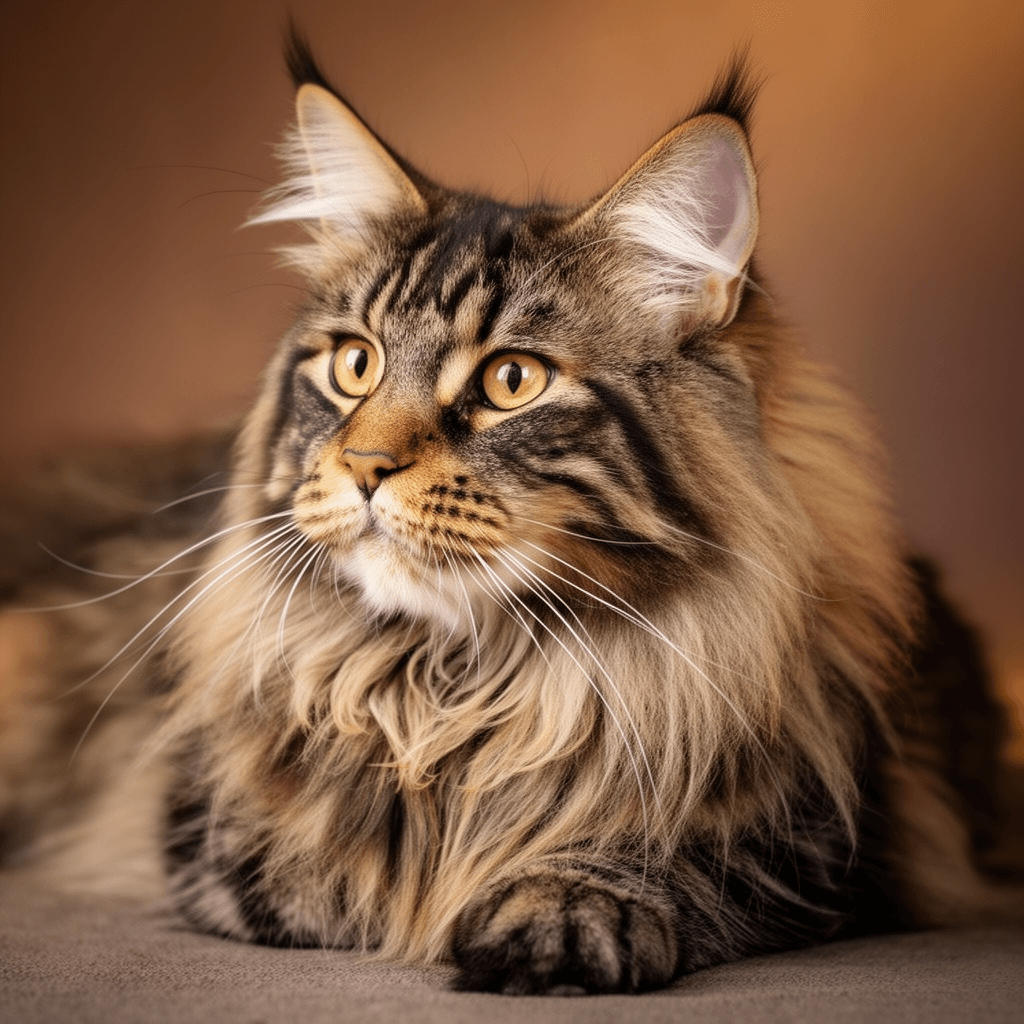
You knew maine coons were big. But the first time you see one in person stretched across a couch like a small lion “big” feels like an understatement. These cats aren’t just large. They’re in a category of their own.
This guide covers everything about maine coon size: average weights, height, how long they keep growing, and what’s actually normal for your cat. Whether you’re about to bring one home or already share your couch with one, here’s what to expect.
📦 Quick Answer Maine coons are the largest domestic cat breed. A fully grown male typically weighs 13–18 lbs and stands 10–16 inches tall, while females usually land between 8–12 lbs. Most maine coons don’t reach their full size until age 3–5 much later than other breeds.
Table of Contents
1. What Makes Maine Coon Size So Different From Other Cats?
Most domestic cats reach their full adult size by 12 months. Maine coons don’t follow that timeline not even close. They’re slow developers, and their bodies keep growing for 3 to 5 years before reaching full maine coon size.
This isn’t a quirk. It’s biology. Maine coons originated in the harsh winters of New England, and their large, muscular frames likely evolved as an adaptation to cold climates. Their bodies needed more time and more mass to thrive.
The Genetics Behind the Giant
Maine coon size is largely written in their DNA. The breed carries genetics that promote larger skeletal frames, longer torsos, and denser muscle mass compared to the average house cat. Males especially benefit from testosterone-driven growth that pushes them toward the upper end of the size range.
A 2019 review published in the Journal of Feline Medicine and Surgery noted that large-breed cats like the maine coon have distinctly different growth curves from standard domestic cats something every maine coon owner should understand when tracking their cat’s development.
2. How Big Do Maine Coons Get? Weight, Height & Length
Here’s the honest answer: maine coon full grown size varies quite a bit between individuals and especially between males and females.
Maine Coon Size vs. Average House Cat
| Measurement | Average House Cat | Maine Coon (Female) | Maine Coon (Male) |
|---|---|---|---|
| Weight | 8–10 lbs | 8–12 lbs | 13–18 lbs |
| Body Length | 18 inches | 19–30 inches | 19–40 inches |
| Height (shoulder) | 9–10 inches | 8–14 inches | 10–16 inches |
| Tail Length | 10–11 inches | 12–18 inches | 12–18 inches |
Males are almost always noticeably larger than females. If your male maine coon tips the scale at 15 lbs and feels solid rather than soft, that’s likely healthy muscle not excess weight.
Maine coon weight alone doesn’t tell the full story. Their long, rectangular bodies and thick, dense fur make them look even larger than the numbers suggest. A 13-lb maine coon often looks bigger than a 13-lb cat of any other breed.
3. Maine Coon Growth Chart: When Do They Stop Growing?
Most cat owners expect their kitten to grow fast, plateau around one year, and stay that size. With maine coons, that assumption will throw you off.

Month-by-Month Weight Milestones
| Age | Average Weight (Male) | Average Weight (Female) |
|---|---|---|
| 3 months | 3–4 lbs | 2.5–3.5 lbs |
| 6 months | 6–8 lbs | 5–7 lbs |
| 12 months | 10–14 lbs | 7–10 lbs |
| 2 years | 12–16 lbs | 8–11 lbs |
| 3–5 years (fully grown) | 13–18 lbs | 8–12 lbs |
Your maine coon at 12 months may look like a full-grown cat. But maine coon growth continues well past that birthday. They’ll keep filling out adding muscle, broadening in the chest, and developing that signature ruff until age 3 to 5.
Don’t panic if your one-year-old maine coon seems behind schedule on maine coon weight. They’re just getting started.
4. The Largest Maine Coon on Record
If you think your maine coon is big, meet Barivel. This Italian maine coon holds the Guinness World Record for longest living domestic cat, measuring 120 cm (47.2 inches) from nose to tail. He was confirmed in 2018 and has held the title since.
Biggest Maine Coons Ever Recorded
The largest maine coon individuals on record have pushed past 25–30 lbs. These aren’t typical most cats that heavy are carrying excess fat, which is a health concern. But in exceptionally large, well-muscled males, the upper end of the range can genuinely hit 20–25 lbs.
Stewie, a maine coon from Nevada, previously held the record for longest cat at 123 cm before his passing. These extreme cases show what the genetics of this breed are capable of, but they’re outliers, not benchmarks.
If you’re curious about other big, bold cat breeds and how maine coons fit into the wider world of impressive felines, check out our guide to guard cats and protective cat breeds maine coons make a notable appearance there too.
5. What Affects Your Maine Coon’s Full Grown Size?
Maine coon full grown size isn’t fixed at birth. Several factors shape how large your specific cat will actually get.
Does Diet Affect Maine Coon Growth?
Yes, nutrition matters more in the first two years than at any other point. A maine coon fed a high-protein, appropriately portioned diet during kittenhood is more likely to reach their genetic size potential. Underfed kittens can experience stunted development that affects adult size.
Equally, overfeeding creates a different problem. An overweight maine coon may look impressively large, but excess fat puts strain on their joints – especially important for a breed already prone to hip dysplasia.
Key factors that influence your maine coon’s size:
- Genetics – parents’ size is the best predictor
- Sex – males consistently outsize females
- Neutering age – early neutering can slightly alter growth plate timing
- Nutrition – high-protein diet supports muscle development
- Health history – parasites or illness in kittenhood can affect growth
6. When to See a Vet About Your Maine Coon’s Size
Maine coons are big cats, but that doesn’t mean every pound is healthy. Knowing the difference between a naturally large cat and one who’s struggling matters.
Signs Your Maine Coon’s Weight Is a Health Concern
See your vet if you notice:
- Rapid, unexplained weight loss over a few weeks
- Difficulty jumping or reluctance to move – could signal hip dysplasia, which the breed is prone to
- A belly that looks bloated or distended rather than just wide
- Ribs you can’t feel at all, or ribs that are clearly visible and sharp
- Labored breathing after minimal activity
Maine coons are also prone to hypertrophic cardiomyopathy (HCM), a heart condition that can cause fluid retention and sudden weight changes. According to the Cornell Feline Health Center, HCM is the most common heart disease in cats and maine coons are one of the higher-risk breeds. Any sudden change in size or weight warrants a vet call, not a wait-and-see approach.
If your maine coon has been on the smaller side their whole life and you’re wondering whether their growth is on track, your vet can run a full body condition score assessment and compare it against breed-specific benchmarks.
Frequently Asked Questions
How big do maine coons get compared to a normal cat? Maine coons are significantly larger than the average house cat. A typical domestic cat weighs 8–10 lbs; a male maine coon can hit 13–18 lbs with a body length up to 40 inches including the tail. Their longer torsos, bigger bone structure, and thick coats make them look even larger in person than the numbers suggest.
What is the average maine coon weight for a male vs. female? Male maine coons typically weigh 13–18 lbs at full maturity, while females usually settle between 8–12 lbs. Some especially large males can exceed 20 lbs while remaining healthy and muscular. Your vet can confirm whether your cat’s weight falls within a healthy range for their frame size.
When is a maine coon fully grown? Most maine coons reach their full grown size between ages 3 and 5 far later than the average domestic cat, which matures around 12 months. Don’t judge your maine coon’s adult size based on their first birthday. They’ll keep growing in muscle, chest width, and overall stature for years after that.
What is the largest maine coon ever recorded? Barivel, an Italian maine coon, currently holds the Guinness World Record for the world’s longest living domestic cat at 120 cm (47.2 inches). The late Stewie, from Nevada, previously held the record at 123 cm. These are extreme outliers most maine coons are large, but not record-breaking large.
Are maine coons bigger than dogs? Maine coons are larger than some small dog breeds. A 15–18 lb maine coon rivals a Chihuahua, a Toy Fox Terrier, or a small Pomeranian in weight and can be longer than some. They won’t match a Labrador, but next to a small dog, your maine coon can hold their own.
How can I tell if my maine coon is a healthy weight? Run your hands along your cat’s sides. You should be able to feel their ribs with gentle pressure not see them, but feel them. A healthy maine coon has a visible waist when viewed from above and a slight tummy tuck from the side. If you can’t feel the ribs at all, or the belly hangs low, talk to your vet about a weight management plan.
The Bottom Line on Maine Coon Size
Maine coons are genuinely large not just “big for a cat” large, but impressively, head-turningly large. A fully grown male maine coon size can rival small dog breeds, and their slow development means you’re watching that growth unfold over years, not months.
The typical range of 13–18 lbs for males and 8–12 lbs for females covers most healthy adults, but genetics, diet, and sex all play a role in where your cat lands. If your maine coon seems smaller than expected or has had sudden weight changes, a vet check is always the right move.
Want to understand more about what large, confident cat breeds are really like to live with? Explore our overview of protective and guard cat breeds you might be surprised how maine coons rank.

Zingi is a digital content creator and pet enthusiast with a passion for helping animal lovers make smarter, more informed decisions. With hands-on experience researching dog breeds, pet care routines, and tech products, Zingi writes guides that cut through the noise and focus on what actually matters for everyday pet owners and tech users.


